Emperors of the Southern Tang dynasty 南唐
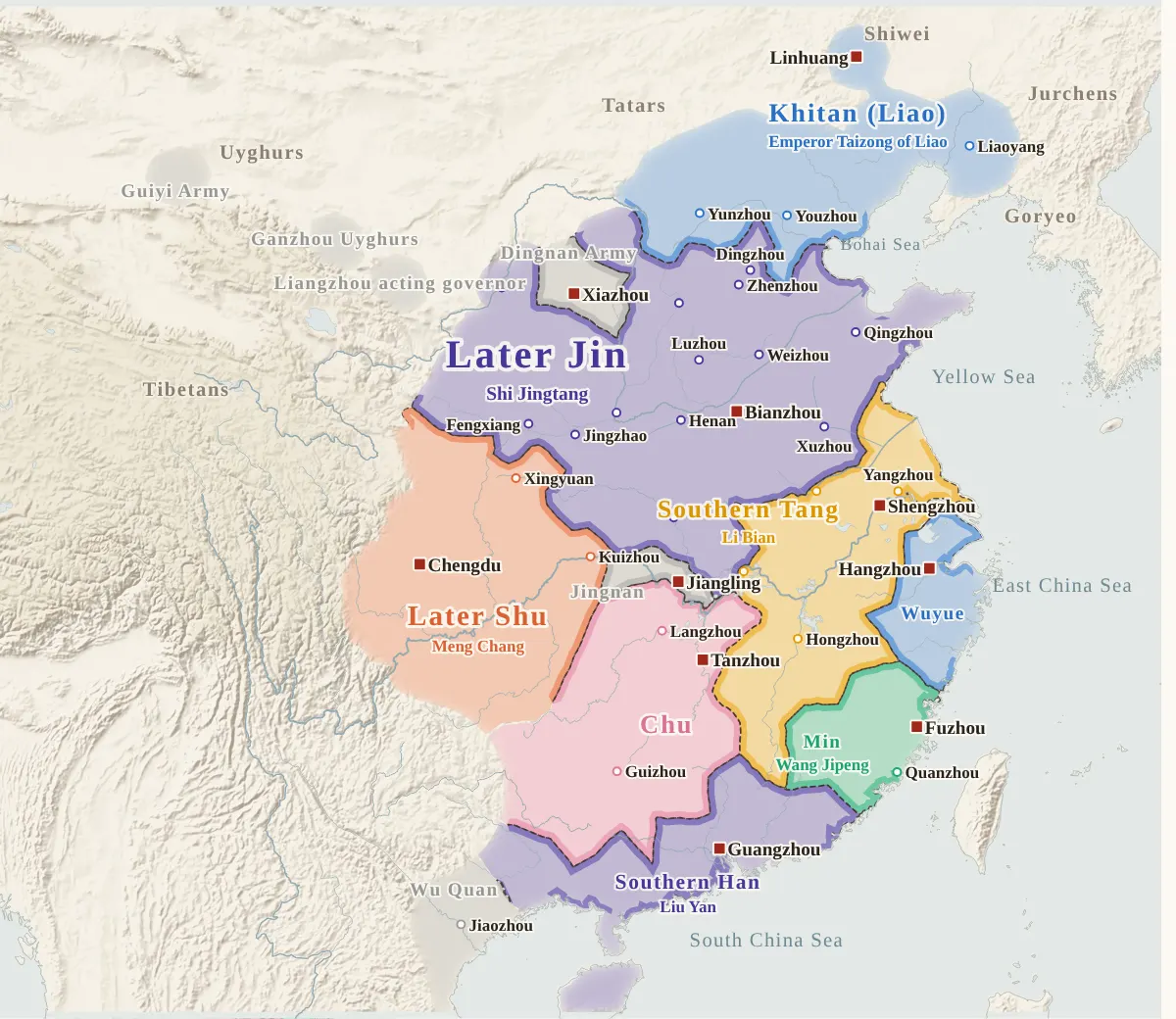
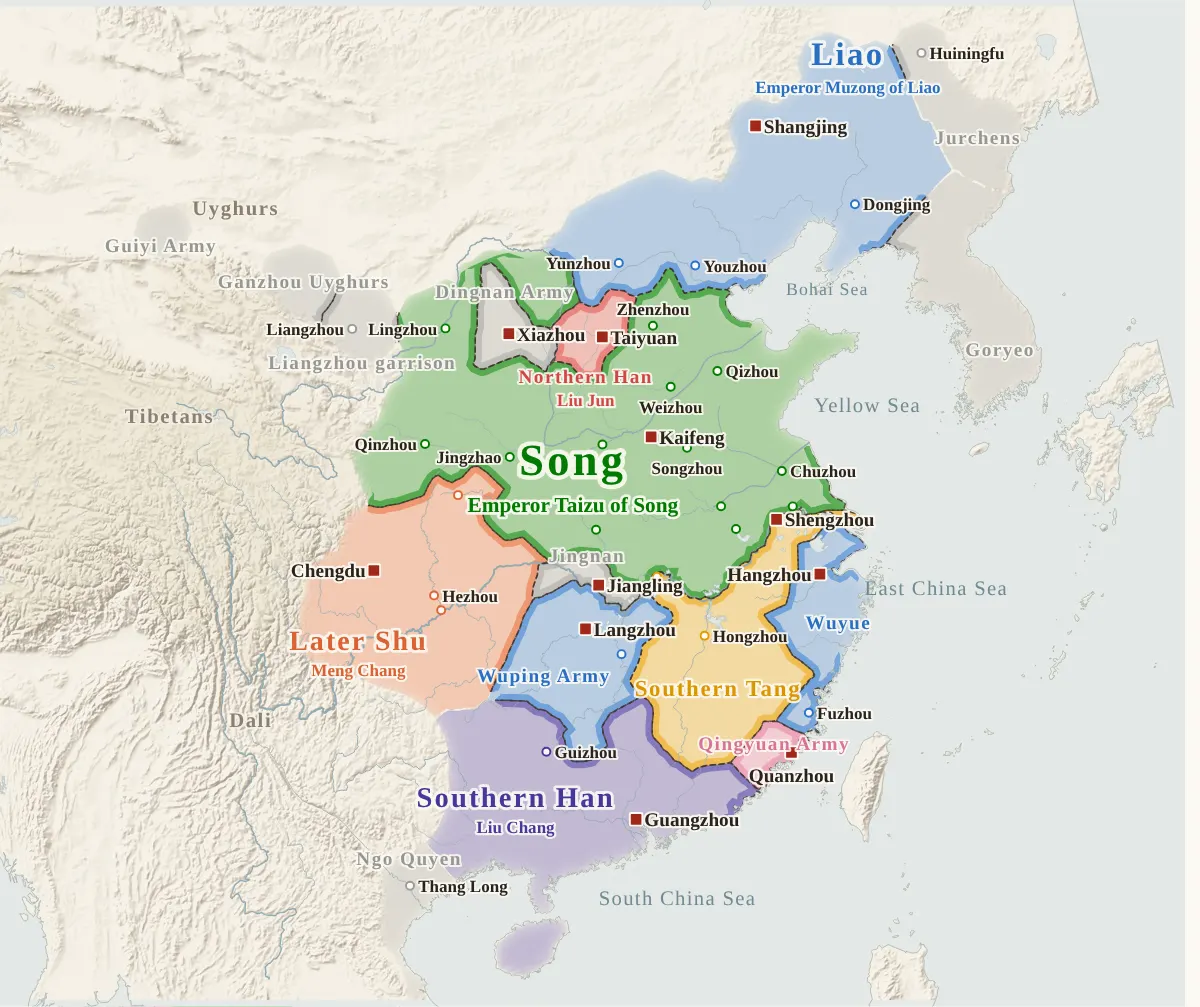
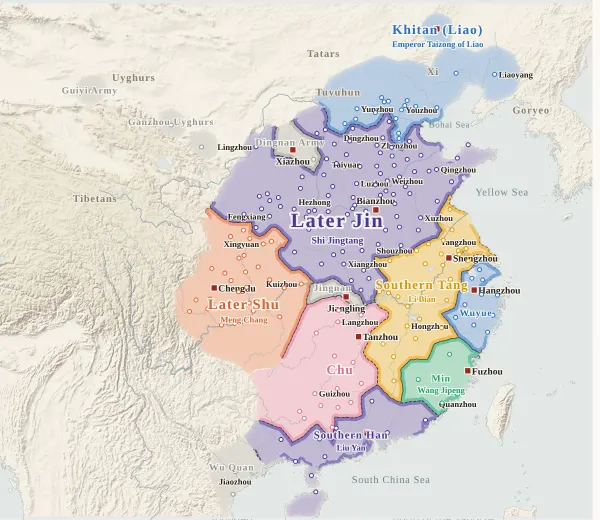
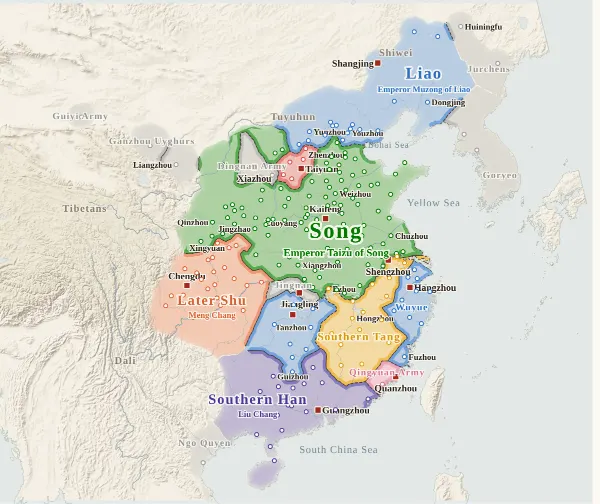
The emperors of Southern Tang (937–958) in order of accession, from Li Bian to Li Jing.
- Rulers
- 3 rulers
Rulers in order
- 1stLi Bian南唐烈祖 Nán Táng Lièzǔ李昪 Lǐ Biàn937–943 · 5 years · Natural causes, age 54937–9435 yearsNatural causes, age 54
- 2ndLi Jing南唐元宗 Nán Táng Yuánzōng李璟 Lǐ Jǐng943–958 · 15 years · Natural causes, age 44–45943–95815 yearsNatural causes, age 44–45
- 3rdLi Yu李煜961–976 · Did not take the title of emperor961–976Did not take the title of emperor
Rise and fall of the Southern Tang dynasty
Rise
Li Bian, the Prince of Qi, who had been raised as a son of Xu Wen and had taken control of the government of Yang Wu, was given the throne in 937 by Yang Pu, the ruler of Yang Wu, and became emperor at Jinling. Li Bian later changed his surname back from Xu to Li and claimed descent from the imperial house of Tang, and the name of the state was settled as Tang.
Course
Li Bian did not use his troops rashly, and even when the palaces and treasuries of Wuyue burned, he did not invade but sent envoys to offer condolences. In the reign of Li Jing, who succeeded to the throne in 943, Southern Tang seized Jianzhou by exploiting the internal strife of Min but suffered a heavy defeat by Wuyue at Fuzhou, and in 951 it took Tanzhou in Chu but could not hold the land of Chu either.
From 955 Southern Tang was attacked by Chai Rong of Later Zhou, and in 958 Li Jing offered up the lands north of the Yangtze, making the river the border, gave up the title of emperor to call himself Ruler of the State, and used the reign titles of Later Zhou. In 961 Li Jing moved his capital to the Southern Capital at Hongzhou, but he died in the same year, and the crown prince Li Yu succeeded him at Jinling.
Fall
In 972 Li Yu lowered the names of his government offices and the titles of the princes to honor the Northern Song court, but in 974, when Emperor Taizu of Song ordered him to come to the capital, he pleaded illness and did not go, and the Northern Song army marched south against him. Early in 976 the Northern Song army took Jinling, and Li Yu was captured, then brought to the Northern Song capital and made Marquis Weiming.
Translated from the Japanese text of this site, which is written from the official histories. Years are the Western calendar years of the dates, as in English reference works.