Li Jing
The eldest son of Li Bian of Southern Tang, he was defeated by Chai Rong of Later Zhou, handed over the lands north of the Yangtze, gave up the imperial title and called himself ruler of the state.
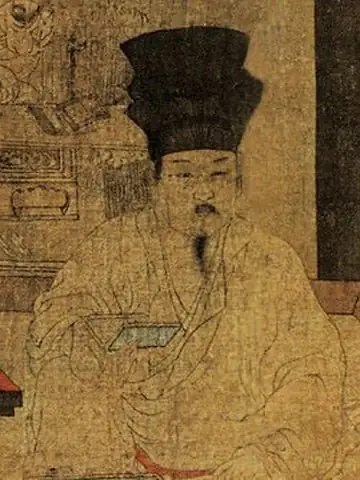
Southern Tang · Five Dynasties and Ten Kingdoms · 2nd ruler
Reigned 943–958 (15 years)
南唐元宗 Other names ›
Facts
Li Jing reigned for 15 years (943–958), taking the throne at 26 or 27, and died of natural causes at 44 or 45. 2nd ruler of Southern Tang.
- Reign
- 8 April 943 – June 958 (2nd ruler of Southern Tang)
- Length of reign
- 15 years
- Born
- Unknown
- Died
- 12 August 961
- Age at accession
- 26–27
- Age at death
- 44–45
- Cause of death
- Natural causesNatural death or illness (including old age)
- Path to the throne
- Designated heirSucceeded the previous ruler of the same regime, who had chosen the heir (by testament, naming a crown prince, etc.)
- Predecessor
- Li Bian
- Era names
- 保大 Bǎodà (proclaimed 943)
- 中興 Zhōngxīng (proclaimed 958)
- 交泰 Jiāotài (proclaimed 958)
- Temple name
- 南唐元宗 Nán Táng Yuánzōng
- Personal name
- 李璟 Lǐ Jǐng
- Wade–Giles
- Nan T'ang Yüan-tsung · Li Ching
Life
In brief
Lu You's Nantang Shu praises him as gifted in many arts and fond of reading, kind, humane, respectful and frugal, and loving toward the people, and concludes that when the Later Zhou army advanced in force many of the men he entrusted were unfit for their posts, so that he was defeated, lowered his title, and died in grief and regret.
Road to the throne
When his father died in 943, according to Lu You's Nantang Shu, he was still weeping and trying to yield the throne to his younger brothers, but Zhou Zong dressed him in the imperial robes and crown and he took the throne.
Reign and death
According to the New History of the Five Dynasties, he employed Feng Yansi and others, and the people of Wu called them the Five Ghosts. He issued an order that kept the officials away from him and entrusted government affairs to his younger brother Jingsui, but when Jia Chong appealed to him in tears he withdrew the order. Lu You and the Zizhi Tongjian say that the order came from his wish to pass the throne to a younger brother. In 943 he defeated the rebellion of Zhang Yuxian, took Jianzhou by exploiting the turmoil in Min (in 945 according to the Zizhi Tongjian and Lu You, in 946 according to the New History of the Five Dynasties), and in 951 he took Tanzhou in Chu. In the attack on Fuzhou his forces suffered a heavy defeat at the hands of Wuyue, and he also lost the lands of Chu. The New History of the Five Dynasties attributes the revolt in Chu to the heavy exactions of the chief minister Feng Yansi. The southern campaign of Later Zhou began in 955. In 956 he offered to give up the imperial title and cede six prefectures in return for peace, but Chai Rong refused. According to the New History of the Five Dynasties and the Zizhi Tongjian, he was displeased when Li Deming returned from Later Zhou and praised Chai Rong lavishly, and when Li Deming was slandered as having sold out the state, he had him beheaded. Lu You says he beheaded Li Deming for the offence of having asked to cede land. In 958, when Later Zhou reached the Yangtze, he offered to pass the state to the crown prince, out of fear of the Later Zhou army and also, according to the New History of the Five Dynasties and the Zizhi Tongjian, out of shame at giving up his titles. According to Lu You, the abdication was not permitted, and he gave up the imperial title, called himself ruler of the state, and adopted the Later Zhou era name. According to the New History of the Five Dynasties, after the death of Crown Prince Ji, when Zhong Mo told him that Congjia was frivolous, he grew angry, demoted Zhong Mo, and made Congjia (Li Yu) crown prince. The Zizhi Tongjian also says that he grew angry but gives a different charge as the grounds for the demotion, and Lu You and the section on Li Yu in the New History of the Five Dynasties place Congjia's naming as crown prince at the time of the move of the capital in 961. In 961 he moved to Hongzhou, but it was so cramped that the officials longed to return, and Li Jing too regretted the move; according to the New History of the Five Dynasties, his anger did not subside. He died the same year.
Translated from the Japanese text of this site, which is written from the official histories. Years are the Western calendar years of the dates, as in English reference works. Months are omitted because the histories use the Chinese lunar calendar.
During the reign
Number of times each event is recorded in the official histories. How each item is counted
- Era name changes
- 3
- General amnesties
- 3
- Empresses installed
- 1
- Crown princes deposed
- 1
- Personal campaigns
- 0
- Rebellions suppressed
- 2
- Rebellions faced
- 2
- Capital relocations
- 0