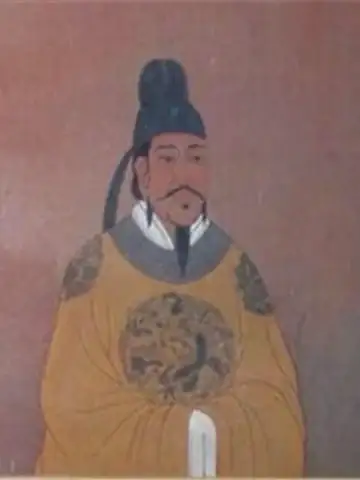
Emperor Wenzong of Tang
Emperor Wenzong of Tang was put on the throne by eunuchs and favored frugality, but was defeated in the Sweet Dew Incident, an attempt to get rid of the eunuchs.
Emperors of Tang
- 1stEmperor Gaozu of Tang唐高祖 Táng Gāozǔ李淵 Lǐ Yuān618–626 · 8 years · Natural causes, age 68–69618–6268 yearsNatural causes, age 68–69
- 2ndEmperor Taizong of Tang唐太宗 Táng Tàizōng李世民 Lǐ Shìmín626–649 · 22 years · Natural causes, age 50626–64922 yearsNatural causes, age 50
- 3rdEmperor Gaozong of Tang唐高宗 Táng Gāozōng李治 Lǐ Zhì649–683 · 34 years · Natural causes, age 55649–68334 yearsNatural causes, age 55
- 4th, 6thEmperor Zhongzong of Tang唐中宗 Táng Zhōngzōng李顯 Lǐ Xiǎn684; restored 705–710 · 5 years · Assassinated, age 53684; restored 705–7105 yearsAssassinated, age 53
- 5th, 8thEmperor Ruizong of Tang唐睿宗 Táng Ruìzōng李旦 Lǐ Dàn684–690; restored 710–712 · 8 years · Natural causes, age 54684–690; restored 710–7128 yearsNatural causes, age 54
- 7thEmperor Shang of Tang唐殤帝 Táng Shāngdì李重茂 Lǐ Chóngmào710 · 17 days · Unknown, age 15–1671017 daysUnknown, age 15–16
- 9thEmperor Xuanzong of Tang唐玄宗 Táng Xuánzōng李隆基 Lǐ Lóngjī712–756 · 43 years · Natural causes, age 76–77712–75643 yearsNatural causes, age 76–77
- 10thEmperor Suzong of Tang唐肅宗 Táng Sùzōng李亨 Lǐ Hēng756–762 · 5 years · Natural causes, age 50–51756–7625 yearsNatural causes, age 50–51
- 11thEmperor Daizong of Tang唐代宗 Táng Dàizōng李豫 Lǐ Yù762–779 · 17 years · Natural causes, age 52762–77917 yearsNatural causes, age 52
- Li Chenghong李承宏 Lǐ Chénghóng763 · 12 days · Unknown76312 daysUnknown
- 12thEmperor Dezong of Tang唐德宗 Táng Dézōng李适 Lǐ Kuò779–805 · 25 years · Natural causes, age 62779–80525 yearsNatural causes, age 62
- 13thEmperor Shunzong of Tang唐順宗 Táng Shùnzōng李誦 Lǐ Sòng805 · 184 days · Natural causes, age 44–45805184 daysNatural causes, age 44–45
- 14thEmperor Xianzong of Tang唐憲宗 Táng Xiànzōng李純 Lǐ Chún805–820 · 14 years · Assassinated, age 41805–82014 yearsAssassinated, age 41
- 15thEmperor Muzong of Tang唐穆宗 Táng Mùzōng李恆 Lǐ Héng820–824 · 4 years · Natural causes, age 28820–8244 yearsNatural causes, age 28
- 16thEmperor Jingzong of Tang唐敬宗 Táng Jìngzōng李湛 Lǐ Zhàn824–827 · 2 years · Assassinated, age 17824–8272 yearsAssassinated, age 17
- 17thEmperor Wenzong of Tang唐文宗 Táng Wénzōng李昂 Lǐ Áng827–840 · 13 years · Natural causes827–84013 yearsNatural causes
- 18thEmperor Wuzong of Tang唐武宗 Táng Wǔzōng李炎 Lǐ Yán840–846 · 6 years · Natural causes, age 31840–8466 yearsNatural causes, age 31
- 19thEmperor Xuānzong of Tang唐宣宗 Táng Xuānzōng李忱 Lǐ Chén846–859 · 13 years · Natural causes, age 49846–85913 yearsNatural causes, age 49
- 20thEmperor Yizong of Tang唐懿宗 Táng Yìzōng李漼 Lǐ Cuǐ859–873 · 13 years · Natural causes, age 39859–87313 yearsNatural causes, age 39
- 21stEmperor Xizong of Tang唐僖宗 Táng Xīzōng李儇 Lǐ Xuān873–888 · 14 years · Natural causes, age 25873–88814 yearsNatural causes, age 25
- Li Yun李熅 Lǐ Yùn886–887 · 71 days · Executed886–88771 daysExecuted
- 22nd, 23rdEmperor Zhaozong of Tang唐昭宗 Táng Zhāozōng李曄 Lǐ Yè888–900; restored 901–904 · 16 years · Assassinated, age 37888–900; restored 901–90416 yearsAssassinated, age 37
- Li Yu李裕 Lǐ Yù900–901 · 50 days · Assassinated900–90150 daysAssassinated
- 24thEmperor Ai of Tang唐哀帝 Táng Āidì李柷 Lǐ Zhù904–907 · 2 years · Assassinated, age 15904–9072 yearsAssassinated, age 15