Yuan Shu
He was a warlord at the end of the Eastern Han who took the imperial title and called his regime Zhongjia.
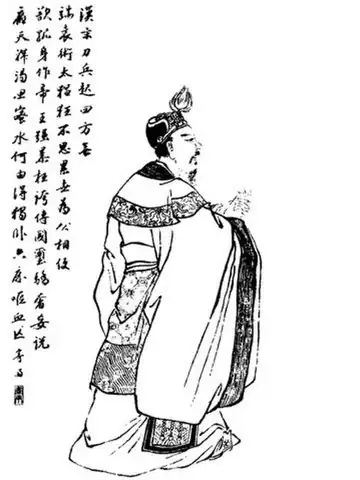
Facts
Yuan Shu reigned for 2 years (197–199) and died of natural causes (age unknown). 1st ruler of Zhongjia.
- Reign
- February 197 – July 199 (1st ruler of Zhongjia)
- Length of reign
- 2 years
- Born
- Unknown
- Died
- July 199
- Age at accession
- Unknown
- Age at death
- Unknown
- Cause of death
- Natural causesNatural death or illness (including old age)
- Path to the throne
- Self-proclaimedFounded the titleClaimed the imperial title without receiving the throne from an earlier ruler (e.g. Emperor Gaozu of Han, Emperor Guangwu of Han, Hongwu Emperor)
- Personal name
- 袁術 Yuán Shù
- Wade–Giles
- Yüan Shu
Life
In brief
The Book of the Later Han appraises him as proud and self-willed, exalting himself and slighting others, and the assessment in the Records of the Three Kingdoms holds that his glory did not last and that he brought it on himself.
Road to the throne
He was a son of Yuan Feng, the Sikong, and a younger cousin of Yuan Shao. In his youth he was known for his chivalrous spirit and amused himself with hawks and dogs, but later he changed his conduct. He was made General of the Rear by Dong Zhuo, but he feared trouble and fled to Nanyang. In Nanyang he maintained no law and order and used plunder for his funds, afflicting the people. The Book of the Later Han writes that when he heard that Sun Jian had obtained the imperial seal he seized Sun Jian's wife and took the seal, and the Jiangbiao Zhuan cited in Pei Songzhi's commentary holds this story of the seal to be false. When he was badly defeated by Cao Cao at Kuangting, he fled to Jiujiang, killed Chen Wen, the Inspector of Yangzhou, and took the province for himself. Pei Songzhi, citing the Yingxiong Ji, notes that Chen Wen died of illness and was not killed by Yuan Shu. Though he thought highly of Sun Ce, he promised to make him Administrator of Jiujiang or Lujiang and then used other men instead. He believed that the prophecy that the one to replace the Han would be Dangtu Gao referred to himself, and he consulted his subordinates about the imperial throne, but Yan Xiang remonstrated with him and he fell silent. In 197, on the strength of the omen of the mandate that Zhang Jiong of Henei presented, he took the imperial title, appointed the high ministers and the hundred officials, and sacrificed to Heaven and Earth.
Reign and death
When he took the imperial title he grew still more extravagant, and the women of his harem numbered several hundred, but he gave no heed to those below him when they went hungry. His troops were weak and the hearts of his followers had turned away, and drought and famine came on top of that, so that in the land of the Yangtze and the Huai people ate one another. He was about to behead Shu Zhongying, the Chancellor of Pei, for giving the army's hundred thousand hu of grain to the starving people, but when he was told that one life could save the people, he got down from his horse and asked him whether he meant to keep the great reputation of the realm for himself. In 199 he burned his palaces and turned to his subordinates, but they refused him, and according to the Book of the Later Han he yielded the imperial title to Yuan Shao. The biography of Yuan Shu in the Records of the Three Kingdoms says that he fell ill on the way to Yuan Tan and died on the road, and the annals of Emperor Wu of Wei write that Cao Cao had Liu Bei and others intercept him, whereupon Yuan Shu died of illness. The Book of the Later Han writes that, after Liu Bei blocked his way and he returned to Shouchun, he came to Jiangting, lamented that it had come to this for Yuan Shu, and, falling ill from indignation, vomited blood and died. The Wu Shu cited in Pei Songzhi's commentary records that there was nothing in the kitchen but wheat husks, that in the height of the heat he could not get honey water, and that he vomited more than a dou of blood.
Translated from the Japanese text of this site, which is written from the official histories. Years are the Western calendar years of the dates, as in English reference works. Months are omitted because the histories use the Chinese lunar calendar.
During the reign
Number of times each event is recorded in the official histories. How each item is counted
- Era name changes
- 0
- General amnesties
- 0
- Empresses installed
- 0
- Crown princes deposed
- 0
- Personal campaigns
- 1
- Rebellions suppressed
- 0
- Rebellions faced
- 1
- Capital relocations
- 0