Zhang Xianzhong
He was a figure who at the end of Ming fought his way from Huguang into Sichuan, called himself King of the Great Xi at Chengdu and carried out killing after killing, and is said to have died fighting the Qing army.
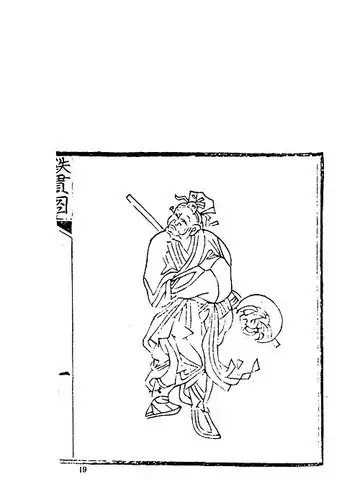
Facts
Zhang Xianzhong reigned for 2 years (1644–1647), taking the throne at 37 or 38, and was killed in battle at 40. 1st ruler of Xi.
- Reign
- 4 December 1644 – 2 January 1647 (1st ruler of Xi)
- Length of reign
- 2 years
- Born
- 1606
- Died
- 2 January 1647
- Age at accession
- 37–38
- Age at death
- 40
- Cause of death
- Killed in battleDied in combat, whether on campaign, in defense or while suppressing a revolt
- Path to the throne
- Self-proclaimedFounded the titleClaimed the imperial title without receiving the throne from an earlier ruler (e.g. Emperor Gaozu of Han, Emperor Guangwu of Han, Hongwu Emperor)
- Era names
- 大順 Dàshùn (proclaimed 1644)
- Chinese name
- 大西大順帝 Dà Xī Dàshùndì
- Personal name
- 張獻忠 Zhāng Xiànzhōng
- Wade–Giles
- Ta Hsi Ta-shun-ti · Chang Hsien-chung
Life
Road to the throne
He came from Yan'an Garrison, and according to the biographies of roving bandits, when he was a soldier of the Yansui Command he broke the law and was about to be beheaded, but was saved by Chen Hongfan, who found his looks striking. In 1630 he joined the rising of Wang Jiayin and called himself the Eighth Great King. In 1638, learning that Chen Hongfan was under Xiong Wencan, he sent gifts asking whether Chen had forgotten the great kindness Chen had once shown him, and surrendered, but the next year he rebelled again at Gucheng. The annals and the Chongzhen Veritable Records write that this surrender was feigned. In 1641 he took Xiangyang and killed the bound Prince of Xiang, telling him that he wanted to borrow the prince's head to punish Yang Sichang. According to the biographies of roving bandits, in the same year, after a defeat, he took refuge with Li Zicheng, but refused to be treated as a subordinate and was nearly killed, and escaped when Luo Rucai secretly gave him horsemen. The Luqiao Jiwen says that he turned to Luo Rucai, who was with Zicheng, and that Rucai gave him horsemen and sent him off. According to the biographies of roving bandits, after taking Wuchang in 1643 he drowned the Prince of Chu in the Yangtze and killed all the imperial clansmen, set up officials and held examinations, and had the gold of the Prince of Chu's mansion used to relieve the starving. In 1644 he took Chengdu, called himself King of the Great Xi and changed the era to Dashun (the Mingji Nanlüe says he called himself emperor).
Reign and death
The biographies of roving bandits write that he was in a bad mood on any day he did not kill, that he killed all the scholars gathered through his false examinations, and that he had fierce dogs sniff the officials at court and beheaded the ones they picked, calling this killing by Heaven. The words of the so-called Seven Kills Stele known in popular lore do not appear in the books examined, and the sacred edict carried in the Juehuo Lu and the Shubi does not contain a string of the word kill. In 1646 he burned Chengdu and headed north, but his general Liu Jinzhong surrendered to the Qing and guided them. The Mingji Nanlüe writes that after he moved his camp to Xichong, when his trusted men such as Zhang Kewang, worried that he was killing too many, spoke to him, he answered that being emperor was hard and that it would be more fun to kill all the soldiers, carry off the gold and silver and become a woollen-cloth merchant in Nanjing. The History of Ming says that he was hit by an arrow, hid under firewood, and was caught and beheaded. The Draft History of Qing says that Hooge's army beheaded him at Xichong, but who killed him differs from one biography to another, and the Mingshi Jishi Benmo says he died of illness. Gu Yingtai of the Mingshi Jishi Benmo says that no one overthrew the dynasty and its altars as badly as Zhang Xianzhong, and concludes that the crimes of Xian and Chuang were equal.
Translated from the Japanese text of this site, which is written from the official histories. Years are the Western calendar years of the dates, as in English reference works. Months are omitted because the histories use the Chinese lunar calendar.
During the reign
Number of times each event is recorded in the official histories. How each item is counted
- Era name changes
- 1
- General amnesties
- 0
- Empresses installed
- 0
- Crown princes deposed
- 0
- Personal campaigns
- 0
- Rebellions suppressed
- 0
- Rebellions faced
- 1
- Capital relocations
- 0