Li Zicheng
He was the emperor of the Great Shun, who took Beijing and destroyed Ming, but was defeated at Shanhai Pass by Wu Sangui and the Qing army and died soon after.
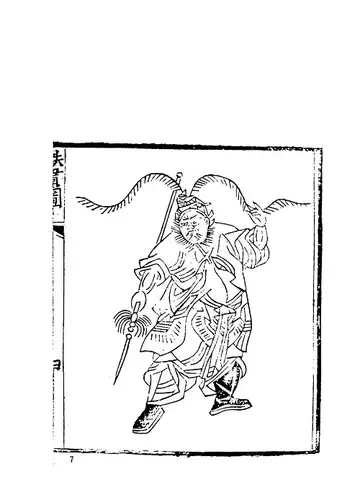
Facts
Li Zicheng reigned for 1 year (1644–1645), taking the throne at 37 or 38, and died at 38 or 39; the cause of death is disputed. 1st ruler of Shun.
- Reign
- 3 June 1644 – November 1645 (1st ruler of Shun)
- Length of reign
- 1 year
- Born
- 1606
- Died
- November 1645
- Age at accession
- 37–38
- Age at death
- 38–39
- Cause of death
- DisputedPrimary sources or accepted accounts conflict and cannot be narrowed to one
- Path to the throne
- Self-proclaimedFounded the titleClaimed the imperial title without receiving the throne from an earlier ruler (e.g. Emperor Gaozu of Han, Emperor Guangwu of Han, Hongwu Emperor)
- Era names
- 永昌 Yǒngchāng (proclaimed 1644)
- Chinese name
- 順永昌帝 Shùn Yǒngchāngdì
- Personal name
- 李自成 Lǐ Zìchéng
- Wade–Giles
- Shun Yung-ch'ang-ti · Li Tzu-ch'eng
Life
Road to the throne
He came from Mizhi in Shaanxi, and in his youth he tended sheep and worked as a post-station runner, was quick to fight, and often broke the law. When his mother's brother Gao Yingxiang was captured and executed in 1636, he was chosen as the Dashing King. In 1640, surrounded by government forces and at the end of his resources, he cast lots with Liu Zongmin, telling him to cut off his head and surrender if the omen was bad, and when it came out good three times Zongmin killed his wives and followed him. The biographies of roving bandits in the History of Ming write that he was suspicious and cruel and killed people every day, but also that he did not care for wine or women, ate plain food and shared hardships with his men. At the urging of Li Yan he held back from killing and gave out goods to the starving, and drew people to him by having children sing a song that if they welcomed the Dashing King they would not have to pay taxes. In 1643, according to the biographies of roving bandits, wanting to rule alone, he came to hate Luo Rucai, beheaded him in his tent at dawn and took over his troops. In 1644 he called himself king at Xi'an and named his state the Great Shun, and when he entered Beijing in the same year, the Chongzhen Emperor hanged himself on Coal Hill.
Reign and death
According to the Jiashen Chuanxin Lu, on seeing Consort Yuan and a princess lying on the ground in the palace, Li Zicheng lamented the Chongzhen Emperor's cruelty and had them treated. He sent more than 800 Ming officials who had surrendered to his generals' camps and had them tortured to give up their money. According to the History of Ming and the Draft History of Qing, Wu Sangui, enraged that his favorite concubine had been taken by Liu Zongmin, defeated the commander guarding Shanhai Pass, and later, together with the Qing army, inflicted a great defeat on Li Zicheng. According to the biographies of roving bandits, after fleeing back to Beijing Li Zicheng proclaimed himself emperor in the Wuying Hall, burned the palace that night, and fled west the next morning. The annals in the Draft History of Qing say that he proclaimed himself emperor in the month he took Beijing. According to the biographies of roving bandits, he later had Li Yan killed on the slander of Niu Jinxing, and as defeats piled up he became stubborn and high-handed again, and put to death even a man who had stolen one chicken. The next year he also abandoned Xi'an and fled to Hubei, and the biographies of roving bandits say that he was surrounded by villagers at Mount Jiugong and hanged himself, while also recording an account that his head was split with a hoe. The annals in the Draft History of Qing also say he hanged himself, while the Xiaotian Jinian says he was cut down by local militia and lists other accounts as well. The preface to the biographies of roving bandits writes that the disaster of the bandits reached its height with Li Zicheng and Zhang Xianzhong, but also that the root of Ming's fall did not lie with the roving bandits.
Translated from the Japanese text of this site, which is written from the official histories. Years are the Western calendar years of the dates, as in English reference works. Months are omitted because the histories use the Chinese lunar calendar.
During the reign
Number of times each event is recorded in the official histories. How each item is counted
- Era name changes
- 1
- General amnesties
- 0
- Empresses installed
- 1
- Crown princes deposed
- 0
- Personal campaigns
- 0
- Rebellions suppressed
- 0
- Rebellions faced
- 0
- Capital relocations
- 0