Skip to content

Emperor Ai of Jin

The eldest son of Emperor Cheng of Jin in the Eastern Jin, he was brought in and enthroned after his cousin Emperor Mu of Jin died without an heir.
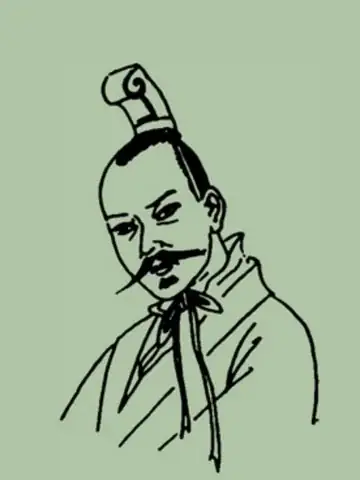
Portrait of Emperor Ai of Jin

Eastern Jin · Jin · 6th ruler

Reigned 361–365 (3 years)

晉哀帝 Other names ›

Facts

Emperor Ai of Jin reigned for 3 years (361–365), taking the throne at 19 or 20, and died of natural causes at 23 or 24. 6th ruler of Eastern Jin.

Reign
13 July 361 – 30 March 365 (6th ruler of Eastern Jin)
Length of reign
3 years
Born
Unknown
Died
30 March 365
Age at accession
19–20
Age at death
23–24
Cause of death
Natural causesNatural death or illness (including old age)
Path to the throne
Installed by othersSucceeded the previous ruler of the same regime, but the choice was made by officials, the army, eunuchs, consort kin, an empress dowager or the imperial clan
Era names
  • 隆和 Lónghé (proclaimed 362)
  • 興寧 Xīngníng (proclaimed 363)
Posthumous name
晉哀帝 Jìn Āidì
Personal name
司馬丕 Sīmǎ Pī
Wade–Giles
Chin Ai-ti · Ssu-ma P'i

Life

In brief

The historians' comment in the Book of Jin calls him lenient and kind and fit to be a ruler, but says that praying to Heaven to ward off calamity with the Hongsi rite stained his virtue.

Road to the throne

His mother, Lady Zhou, was favoured in Emperor Cheng's palace and bore Sima Pi and his younger brother Sima Yi, and her rank was at first guiren. According to the Zizhi Tongjian, when Emperor Cheng fell ill in 342 the two brothers were still in swaddling clothes, and at Yu Bing's urging Emperor Cheng's younger brother by the same mother, Emperor Kang of Jin, was made heir, while Sima Pi was made Prince of Langya. When Emperor Mu died without an heir in 361, an order of the empress dowager had him receive the succession, and the order said that in the Xiankang era Sima Pi should properly have been the heir but had been too young.

Reign and death

Soon after taking the throne he issued an edict grieving that the ancestral temple of the house of the Prince of Langya had no one to offer its sacrifices, and made his younger brother Sima Yi Prince of Langya. In 362 he changed the era name to Longhe and reduced the land tax, and the next year he changed it to Xingning. On his mother's title, the biographies of empresses and consorts give Huan Wen's proposal as furen while the treatise on rites gives it as taifuren, and opinion was divided, but an edict made her huang taifei, with ceremonial dress the same as an empress dowager's. When irregularities in the heavens continued, in 362 he declared by edict that he wished to follow the Hongsi rite and conduct the sacrifice himself, but the biography of Kong Yan says he praised the remonstrance and stopped, while the biography of Jiang You says he rejected the remonstrances twice and stopped only after the third. When his mother died in 363 he wished to wear heavy mourning, and when Jiang Bin rejected this he tried to reduce it to a year's mourning, but after being urged again he complied. The same year he declared an amnesty for the birth of a son, but the annals record neither the child's mother, his name, nor what became of him, and when the emperor died he had no heir. He was fond of Huang-Lao teachings, abstained from grains and took elixirs of long life, and Gao Song remonstrated that this was like an eclipse of the sun or moon, but according to the Zizhi Tongjian he did not listen, and in 364 he took too much of them and suffered poisoning, and could no longer attend to government. Empress Dowager Chu therefore again held court as regent, though the treatise on astronomy in the Book of Jin places the onset of his illness a year earlier, in 363. In 364 the court urged Huan Wen to come to the capital and serve as chief minister, but Huan Wen did not comply. He died in the Western Hall in 365, but the entries on his death in his annals and in the Zizhi Tongjian do not record the cause.

Translated from the Japanese text of this site, which is written from the official histories. Years are the Western calendar years of the dates, as in English reference works. Months are omitted because the histories use the Chinese lunar calendar.

During the reign

Number of times each event is recorded in the official histories. How each item is counted

Era name changes
2
General amnesties
4
Empresses installed
1
Crown princes deposed
0
Personal campaigns
0
Rebellions suppressed
1
Rebellions faced
1
Capital relocations
0

Emperors of Eastern Jin

All 11 emperors of Eastern Jin