Skip to content

Emperor Ling of Han

He was an emperor of the Eastern Han, brought in from a collateral branch to take the throne, and in his reign the proscription of the partisans, the sale of offices, and the Yellow Turban Rebellion piled up.
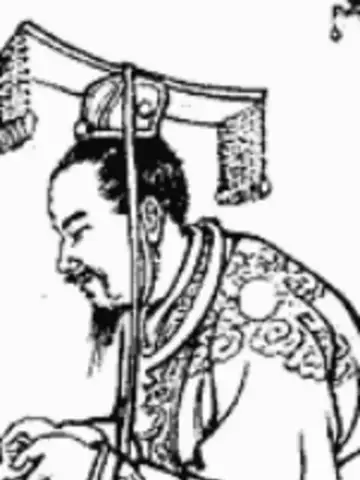
Portrait of Emperor Ling of Han

Eastern Han · 12th ruler

Reigned 168–189 (21 years)

漢靈帝 Other names ›

Facts

Emperor Ling of Han reigned for 21 years (168–189), taking the throne at 10 or 11, and died of natural causes at 32 or 33. 12th ruler of Eastern Han.

Reign
17 February 168 – 13 May 189 (12th ruler of Eastern Han)
Length of reign
21 years
Born
Unknown
Died
13 May 189
Age at accession
10–11
Age at death
32–33
Cause of death
Natural causesNatural death or illness (including old age)
Path to the throne
Installed by othersSucceeded the previous ruler of the same regime, but the choice was made by officials, the army, eunuchs, consort kin, an empress dowager or the imperial clan
Successor
Liu Bian
Era names
  • 建寧 Jiànníng (proclaimed 168)
  • 熹平 Xīpíng (proclaimed 172)
  • 光和 Guānghé (proclaimed 178)
  • 中平 Zhōngpíng (proclaimed 185)
Posthumous name
漢靈帝 Hàn Língdì
Personal name
劉宏 Liú Hóng
Wade–Giles
Han Ling-ti · Liu Hung

Life

In brief

The appraisal in the Book of the Later Han sums up that Emperor Ling entrusted himself to eunuchs, and Gai Xun assessed that he was very intelligent but was hidden by his close attendants.

Road to the throne

He was a great-great-grandson of Emperor Zhang of Han and carried on the hereditary house of the Marquis of Jieduting. When Emperor Huan of Han died without a son, Empress Dowager Dou and her father Dou Wu deliberated on the succession within the palace and welcomed him. He took the throne in 168 and changed the era name to Jianning.

Reign and death

In the year he took the throne, the eunuch Cao Jie forged an edict and put Chen Fan, Dou Wu, and others to death along with their clans. In 169, according to the annals, at the instigation of Hou Lan, Li Ying, Du Mi, and others were charged as partisans and thrown into prison, and more than a hundred died. In 178, when Wang Fu and others slandered Empress Song as practicing curses, Emperor Ling believed it and took back her seal and ribbons, and the empress died of grief in the palace prison. In the same year he opened the Western Residence and sold offices, and had his attendants sell the rank of duke for ten million and of minister for five million. As he came from the poor household of a marquis, he gathered private wealth, and he used to call the eunuch Regular Attendant Zhang his father and Regular Attendant Zhao his mother. He loved learning and composed the Huangxi Pian himself, and had men skilled in calligraphy wait at the Hongdu Gate, but Yue Song, Jia Hu, and others brought in men of bad conduct as well, and he took pleasure in the common gossip they told and gave them positions out of order. In 181 he set up rows of shops in the inner palace and had the palace women buy and sell, wore merchant's clothes and enjoyed drinking feasts, made dogs wear caps, and drove a donkey carriage himself. In the same year, when Empress He poisoned to death Beauty Wang, who had given birth to Liu Xie, Emperor Ling became enraged and tried to depose the empress, but gave it up at the plea of the eunuchs, and in memory of Beauty Wang he composed the Zhuide Fu. In 184, the followers of Zhang Jue of Julu put on yellow turbans and rose up in various places on the same day. Emperor Ling was angered at Zhang Jun, who had petitioned to behead the Ten Regular Attendants, and called him truly a madman, and Zhang Jun later died in prison. The biography of Cui Shi records that later, when Cui Lie paid five million coins and became Minister over the Masses, Emperor Ling told those close to him that if he had bargained a little harder he could have got ten million. In 188 he established the Eight Colonels of the Western Garden, styled himself General Without Superior, and put troops on display at the Pingle Lodge. In 189 he died at Jiade Hall in the Southern Palace. The annals do not record the cause of death, and the biography of He Jin and the Zizhi Tongjian state that when his illness grew grave he entrusted his son Xie to Jian Shuo.

Translated from the Japanese text of this site, which is written from the official histories. Years are the Western calendar years of the dates, as in English reference works. Months are omitted because the histories use the Chinese lunar calendar.

During the reign

Number of times each event is recorded in the official histories. How each item is counted

Era name changes
4
General amnesties
19
Empresses installed
2
Crown princes deposed
0
Personal campaigns
0
Rebellions suppressed
21
Rebellions faced
21
Capital relocations
0

Emperors of Eastern Han

All 14 emperors of Eastern Han