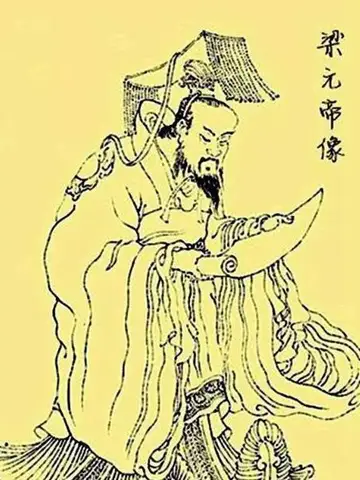
Facts
Emperor Yuan of Liang reigned for 2 years (552–555), taking the throne at 44, and was executed at 46. 4th ruler of Liang.
- Reign
- 13 December 552 – 7 January 555 (4th ruler of Liang)
- Length of reign
- 2 years
- Born
- 16 September 508
- Died
- 27 January 555
- Age at accession
- 44
- Age at death
- 46
- Cause of death
- ExecutedPut to death by a hostile power, a successor regime or a conqueror, as a public act
- Path to the throne
- Proclaimed by supportersFounded the titleDid not receive the throne from an earlier ruler, and did not claim it on their own initiative but was set up by others (e.g. the emperors of the Southern Ming)
- Posthumous name
- 梁元帝 Liáng Yuándì
- Temple name
- 梁世祖 Liáng Shìzǔ
- Personal name
- 蕭繹 Xiāo Yì
- Wade–Giles
- Liang Yüan-ti · Hsiao I
Life
In brief
The historians' comment in the Book of Liang credits him with the heroic talent that destroyed Hou Jing, but says he was deeply suspicious and had no skill in managing his subjects.
Road to the throne
According to the Book of Liang, when Emperor Wu questioned him as a child, he recited the Quli chapter of the Book of Rites and astonished the attendants. He suffered from an eye ailment from birth, and Emperor Wu treated it himself, but he lost the sight of one eye. According to the History of the Southern Dynasties, he was given to affectation and deeply suspicious, always disparaging and harming anyone who surpassed him, and the harm reached even his own kin. After his eyes became afflicted, he had attendants take turns reading books to him and beat any who skipped. According to the biographies of empresses and consorts in the History of the Southern Dynasties, whenever the one-eyed prince was about to come, his consort, Lady Xu, would make up only half of her face to receive him, and the prince would leave in anger. After Hou Jing took Jiankang in 549, Emperor Yuan exercised authority in the emperor's name at Jingzhou; in 551 he sent relief forces to Baling and drove Hou Jing back, and in 552 he had Hou Jing put down. He at first firmly declined the calls to take the throne, but in 552 he became emperor at Jiangling.
Reign and death
When his younger brother Xiao Ji, who had proclaimed himself emperor in Shu the same year, advanced eastward down the river, he took fright, according to the Book of Zhou, and asked Western Wei for help and for an attack on Shu. In 553 he rejected Xiao Ji's request for peace and had him attacked. Taking advantage of the opening, Western Wei attacked Shu and took Yizhou soon after Xiao Ji's death. According to the Zizhi Tongjian, he went as far as issuing an edict to return the capital to Jiankang, and a majority at the council favored it, but there was also counsel that the royal aura there was exhausted, and he himself was content to stay in prosperous Jiangling. According to the Book of Zhou, because he asked for the borders to be fixed according to the old maps and also allied with Northern Qi and spoke insolently, in 554 Yuwen Tai sent troops against Jiangling. In the History of the Southern Dynasties, when the city fell he refused advice to break through the siege and escape, saying it would only add to his disgrace, and he gathered the books and burned them. In the Zizhi Tongjian, asked why, he answered that he had read ten thousand scrolls and still come to this day. The annals in the Book of Liang make no mention of the book burning. According to the History of the Southern Dynasties, he surrendered after sending the crown prince out as a hostage, and as he rode out of the east gate on a white horse he struck the gate leaf with his sword and lamented that he, Xiao Shicheng, had come to this. The annals in the Book of Liang write that he directed the fighting himself and was captured when the city fell. Soon afterward he was killed by Western Wei. According to the History of the Southern Dynasties, a man sent by Emperor Xuan of Western Liang oversaw the execution, and he was killed with a sack of earth.
Translated from the Japanese text of this site, which is written from the official histories. Years are the Western calendar years of the dates, as in English reference works. Months are omitted because the histories use the Chinese lunar calendar.