Chongzhen Emperor
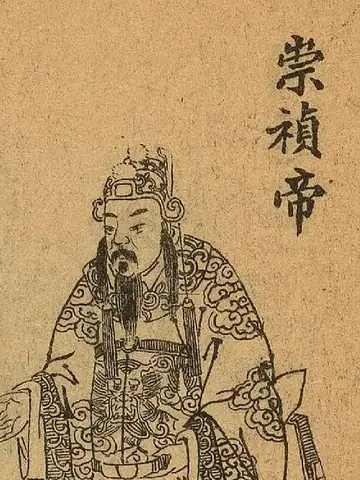
Ming · 17th ruler
崇禎帝 Chóngzhēn Dì朱由檢 Zhū Yóujiǎn
Wade–Giles: Ch'ung-chen Emperor · Chu Yu-chien
Reigned 1627–1644 (16 years)
Reigned 16 years (1627–1644). Died by suicide at 35 (East Asian reckoning). 17th ruler of Ming.
Facts
- Reign
- 2 October 1627 – 25 April 1644 (17th ruler of Ming)
- Length of reign
- 16 years
- Born
- January 1611
- Died
- 25 April 1644
- Age at accession
- 18
- Age at death
- 35
- Cause of death
- Suicide (incl. forced)Took their own life, including when driven to it by deposition or defeat, or when ordered to do so
- Path to the throne
- Designated heirSucceeded the previous ruler of the same regime, who had chosen the heir (by testament, naming a crown prince, etc.)
- Predecessor
- Tianqi Emperor
- Successor
- Hongguang Emperor
- Era names
- 崇禎 Chóngzhēn (proclaimed 1627)
Ages are given in East Asian reckoning (sui): a person is one year old at birth and gains a year at each New Year, so the figure is one or two years higher than the Western age.
Life
In brief
He removed Wei Zhongxian right after taking the throne, but took his own life when Li Zicheng's army captured Beijing, and the basic annals of the History of Ming mark his death as the end of the Ming. The assessment in the History of Ming says that at the start of his reign he removed the treacherous and raised hopes of good order, but the general situation was already in decline, and although he worked hard at government he chose the wrong means, such as trusting eunuchs.
Road to the throne
He was the fifth son of the Taichang Emperor; his mother, Worthy Consort Liu, died early, and he was made Prince of Xin in 1622. In 1627, when his elder brother the Tianqi Emperor became critically ill, he was summoned, received the dying emperor's instructions, and took the throne. The biographies of consorts in the History of Ming write that it was the Tianqi Emperor's Empress Zhang who foiled Wei Zhongxian's scheme and had the throne passed to the Prince of Xin, but the annals do not mention this.
Reign and death
Within the year of his accession he sent Wei Zhongxian away to Fengyang, and Wei Zhongxian hanged himself at Fucheng on the way. The emperor had his corpse dismembered. In 1629 Yuan Chonghuan in Liaodong killed Mao Wenlong at Shuangdao. As the Qing army closed in on the capital, the emperor summoned Yuan Chonghuan, threw him into prison, and put him to death in 1630. The annals do not give the reason. According to the biography of Yuan Chonghuan, the Qing let a captured eunuch overhear talk as if there were a secret pact and then let him escape, and the emperor believed it; Yuan Chonghuan was dismembered in the marketplace for treason, and the realm saw it as an injustice. In 1644 Li Zicheng's army took the outer and then the inner city of Beijing. The biographies of the roving bandits in the History of Ming say that the Zhangyi Gate of the outer city was opened by the eunuch Cao Huachun, while the Chongzhen Shilu says that the Xuanwu Gate of the inner city was opened by the eunuch Wang Xiangyao. The annals record that the emperor wrote on the lapel of his robe that in death he could not face his ancestors and that not a single one of the people should be harmed, and that he died on Wansui Hill; they say neither that he hanged himself nor that the place was Meishan. The biographies of the roving bandits write that the emperor climbed Meishan and hanged himself with silk in a pavilion on the hill, and that Wang Cheng'en hanged himself beside him.
Translated from the Japanese text of this site, which is written from the official histories. Years are given in the Western calendar; months are omitted because the histories use the Chinese lunar calendar.
During the reign
Number of times each event is recorded in the official histories. How each item is counted
- Era name changes
- 1
- General amnesties
- 3
- Empresses installed
- 1
- Crown princes deposed
- 0
- Personal campaigns
- 0
- Rebellions suppressed
- 7
- Rebellions faced
- 10
- Capital relocations
- 0
Emperors of Ming
- 1stHongwu Emperor洪武帝 Hóngwǔ Dì朱元璋 Zhū Yuánzhāng1368–1398 · 30 years · Natural causes, age 711368–139830 yearsNatural causes, age 71
- 2ndJianwen Emperor建文帝 Jiànwén Dì朱允炆 Zhū Yǔnwén1398–1402 · 4 years · Disputed1398–14024 yearsDisputed
- 3rdYongle Emperor永樂帝 Yǒnglè Dì朱棣 Zhū Dì1402–1424 · 22 years · Natural causes, age 651402–142422 yearsNatural causes, age 65
- 4thHongxi Emperor洪熙帝 Hóngxī Dì朱高熾 Zhū Gāochì1424–1425 · 264 days · Natural causes, age 481424–1425264 daysNatural causes, age 48
- 5thXuande Emperor宣德帝 Xuāndé Dì朱瞻基 Zhū Zhānjī1425–1435 · 9 years · Natural causes, age 381425–14359 yearsNatural causes, age 38
- 6th, 8thEmperor Yingzong of Ming正統帝 Zhèngtǒng Dì朱祁鎮 Zhū Qízhèn1435–1449; restored 1457–1464 · 21 years · Natural causes, age 381435–1449; restored 1457–146421 yearsNatural causes, age 38
- 7thJingtai Emperor景泰帝 Jǐngtài Dì朱祁鈺 Zhū Qíyù1449–1457 · 7 years · Disputed, age 301449–14577 yearsDisputed, age 30
- 9thChenghua Emperor成化帝 Chénghuà Dì朱見深 Zhū Jiànshēn1464–1487 · 23 years · Natural causes, age 411464–148723 yearsNatural causes, age 41
- 10thHongzhi Emperor弘治帝 Hóngzhì Dì朱祐樘 Zhū Yòutáng1487–1505 · 17 years · Natural causes, age 361487–150517 yearsNatural causes, age 36
- 11thZhengde Emperor正德帝 Zhèngdé Dì朱厚照 Zhū Hòuzhào1505–1521 · 15 years · Natural causes, age 311505–152115 yearsNatural causes, age 31
- 12thJiajing Emperor嘉靖帝 Jiājìng Dì朱厚熜 Zhū Hòucōng1521–1567 · 45 years · Natural causes, age 601521–156745 yearsNatural causes, age 60
- 13thLongqing Emperor隆慶帝 Lóngqìng Dì朱載坖 Zhū Zàijì1567–1572 · 5 years · Natural causes, age 361567–15725 yearsNatural causes, age 36
- 14thWanli Emperor萬曆帝 Wànlì Dì朱翊鈞 Zhū Yìjūn1572–1620 · 48 years · Natural causes, age 581572–162048 yearsNatural causes, age 58
- 15thTaichang Emperor泰昌帝 Tàichāng Dì朱常洛 Zhū Chángluò1620 · 29 days · Disputed, age 39162029 daysDisputed, age 39
- 16thTianqi Emperor天啓帝 Tiānqǐ Dì朱由校 Zhū Yóujiào1620–1627 · 7 years · Natural causes, age 231620–16277 yearsNatural causes, age 23
- 17thChongzhen Emperor崇禎帝 Chóngzhēn Dì朱由檢 Zhū Yóujiǎn1627–1644 · 16 years · Suicide (incl. forced), age 351627–164416 yearsSuicide (incl. forced), age 35