Skip to content

Emperor Taizu of Jin

The first emperor of the Jin, he led the Jurchen tribes in turning against the Liao, founded the Jin in 1115, and later took the Liao's Shangjing and Yanjing.
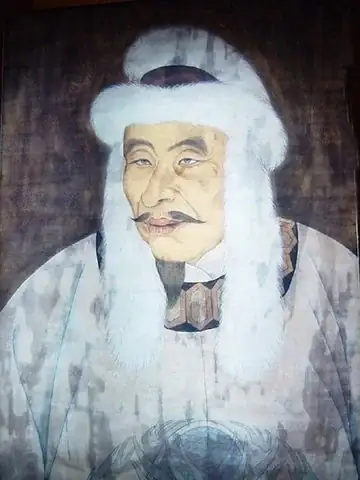
Portrait of Emperor Taizu of Jin

Jin · 1st ruler

Reigned 1115–1123 (8 years)

金太祖 Other names ›

Facts

Emperor Taizu of Jin reigned for 8 years (1115–1123), taking the throne at 46, and died of natural causes at 55. 1st ruler of Jin.

Reign
28 January 1115 – 19 September 1123 (1st ruler of Jin)
Length of reign
8 years
Born
1 August 1068
Died
19 September 1123
Age at accession
46
Age at death
55
Cause of death
Natural causesNatural death or illness (including old age)
Path to the throne
Succession (circumstances unrecorded)Founded the titleSucceeded the previous ruler of the same regime, but the primary sources do not say who decided it (e.g. Qin Shi Huang, Emperor Taizong of Song)
Predecessor
Wanyan Wuyashu 完顏烏雅束 (did not claim the title of emperor)
Era names
  • 收國 Shōuguó (proclaimed 1115)
  • 天輔 Tiānfǔ (proclaimed 1117)
Temple name
金太祖 Jīn Tàizǔ
Personal name
完顏旻 Wányán Mín
Wade–Giles
Chin T'ai-tsu · Wan-yen Min

Life

Road to the throne

He was the second son of Shizu, and the wounded Shizu sat the young Aguda on his knee and said that he would have no worries once the boy grew up. In the time of his elder brother Kangzong, when a bad harvest increased theft he opposed the harsh law and lightened the compensation, and for the people who sold their wives and children to repay debts he stopped the collection for three years. According to the History of Liao, at the Liao's head-fish banquet in 1112 Aguda alone refused to dance, and Emperor Tianzuo of Liao later said that Aguda should be killed, but was dissuaded by Xiao Fengxian; this story does not appear in the History of Jin. When Kangzong died in 1113, he succeeded him as du bojilie. In 1114, on the way to Ningjiang Prefecture he defeated the Liao army and was urged to take the imperial title, but he declined, saying that to assume the great title after a single victory would make him look shallow. In 1115, when his ministers presented the honorific title he took the throne that same day, and saying that the Liao took their name from bin iron, which would in the end break, while gold does not change, he named the state Great Jin. The History of Liao places his accession in 1117 and gives the era name Tianfu, but according to the History of Jin he received the honorific title Great Sage Emperor early in 1117 and changed the era name to Tianfu from that year. Even after his accession, when Sagai and the others of his clan knelt to report matters, he wept and stopped them, saying that he would not readily change the old customs.

Reign and death

In 1115 he defeated the Liao army at Dalugu city and took Huanglong Prefecture. When Emperor Tianzuo of Liao turned back, Aguda shamed and stirred his generals by asking whether they took the pursuit of a departing enemy for courage, and then pursued Tianzuo and routed his army at Hubudagang. The Jieyao from the Song side records that he treated those who submitted like his own kin and employed them without suspicion, but let those who advocated plans of rebellion against the Liao plunder at will. In 1120 he came in person to the walls of the Liao's Shangjing and urged on the officers and men, and when Shemu's troops broke the outer city the commander guarding it surrendered. Early in 1123 he entered Yanjing, and when the Liao's officials asked pardon for their offences he forgave them all. That same year he fell ill, summoned his younger brother Wuqimai, and died at the travelling palace west of Buduluo. The annals of Taizu in the History of Jin do not record the name of his illness, and the annals of Emperor Tianzuo of Liao in the History of Liao place his death under the following year, 1124. The appraisal in the History of Jin says that he excelled in strategy, was broad-minded, and knew men well and employed them.

Translated from the Japanese text of this site, which is written from the official histories. Years are the Western calendar years of the dates, as in English reference works. Months are omitted because the histories use the Chinese lunar calendar.

During the reign

Number of times each event is recorded in the official histories. How each item is counted

Era name changes
2
General amnesties
1
Empresses installed
0
Crown princes deposed
0
Personal campaigns
5
Rebellions suppressed
8
Rebellions faced
9
Capital relocations
0

Emperors of Jin

All 10 emperors of Jin