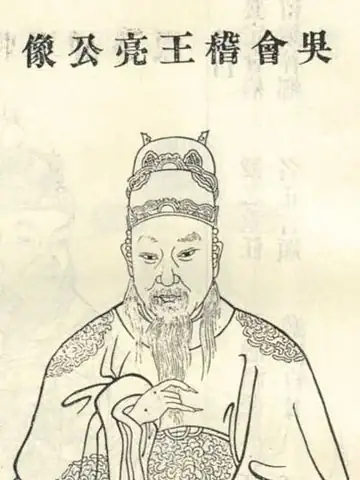
Facts
Sun Liang reigned for 6 years (252–258), taking the throne at 8 or 9, and died at 16 or 17; the cause of death is disputed. 2nd ruler of Eastern Wu.
- Reign
- 23 May 252 – 9 November 258 (2nd ruler of Eastern Wu)
- Length of reign
- 6 years
- Born
- Unknown
- Died
- 260
- Age at accession
- 8–9
- Age at death
- 16–17
- Cause of death
- DisputedPrimary sources or accepted accounts conflict and cannot be narrowed to one
- Path to the throne
- Designated heirSucceeded the previous ruler of the same regime, who had chosen the heir (by testament, naming a crown prince, etc.)
- Personal name
- 孫亮 Sūn Liàng
- Wade–Giles
- Sun Liang
Life
In brief
In his assessment, Chen Shou holds that it was inevitable that Sun Liang, a child without worthy advisers, lost the throne, and he also faults Sun Xiu for not letting the deposed Sun Liang die a proper death.
Road to the throne
In 250, when Sun He was deposed, Sun Liang was made crown prince, and the daughter of Quan Shang, whom Princess Quan had urged on Sun Quan, became his consort. When Sun Quan fell ill, Sun Liang's mother, Empress Pan, worn out from nursing him, fell asleep and was strangled by palace women. In 252 Sun Quan died and Sun Liang took the throne.
Reign and death
In 253 Zhuge Ke routed the Cao Wei army at Dongxing, but later that year he lost most of his troops in the attack on Xincheng and was killed by Sun Jun. After Sun Jun's death his cousin Sun Chen took control of the armies; an angered Lü Ju recommended Teng Yin as chancellor and brought his troops back, but Sun Chen attacked and destroyed Teng Yin and captured Lü Ju. In 257 Sun Liang began to handle government affairs himself and often challenged Sun Chen's memorials. The Wuli relates that Sun Liang asked his attendants whether it was right that the grand general should handle affairs and merely have him write them out. The same book tells how he had a foreign object found in honey split open and, seeing that it was dry inside, recognized it as the doing of a eunuch attendant; the Jiangbiao Zhuan tells a similar story involving a vessel of sugarcane, and Pei Songzhi judges the Jiangbiao Zhuan closer to the truth. When Sun Chen stopped attending court, Sun Liang reopened the matter of how Luyu had been killed and had Zhu Xiong and Zhu Sun put to death. The biographies of the consorts attribute this to Princess Quan having pinned the blame on the two men, and say that it made Sun Chen resent Sun Liang all the more. In 258 Sun Liang plotted with Quan Shang and Liu Cheng to have Sun Chen executed, but the plot leaked. Sun Chen moved his troops first, reduced Sun Liang to Prince of Kuaiji, and brought in Sun Xiu and set him on the throne. As for who leaked the plot, the biography of Sun Chen names Sun Liang's consort, while the Jiangbiao Zhuan cited in the commentary names Quan Shang's wife, and Sun Sheng considers the Jiangbiao Zhuan account the more detailed. According to the Jiangbiao Zhuan, Sun Liang went without food for two days and berated his consort, saying that her father was a muddle-headed fool who had ruined his great undertaking. In 260 a rumor spread that Sun Liang would return as Son of Heaven, and after he was accused of having shamans offer prayers he was demoted to Marquis of Houguan; according to the main text, he killed himself on the way to his fief. The Wulu cited in Pei Songzhi's commentary also records an account that Sun Xiu had him poisoned, the Jiankang Shilu states that he was poisoned, and the Zizhi Tongjian records only his suicide.
Translated from the Japanese text of this site, which is written from the official histories. Years are the Western calendar years of the dates, as in English reference works. Months are omitted because the histories use the Chinese lunar calendar.