Skip to content

Emperor Jing of Han

He was an emperor of Western Han who reduced the lands of the kings at Chao Cuo's urging, put down the rebellion of the seven states of Wu and Chu that followed, and was praised together with his father Emperor Wen of Han as Wen and Jing.
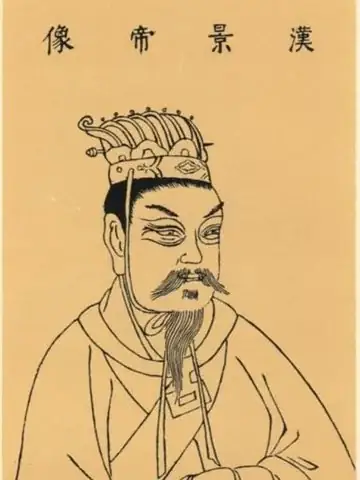
Portrait of Emperor Jing of Han

Western Han · 6th ruler

Reigned 157–141 BC (15 years)

漢景帝 Other names ›

Facts

Emperor Jing of Han reigned for 15 years (157–141 BC), taking the throne at 30 or 31, and died of natural causes at 46 or 47. 6th ruler of Western Han.

Reign
14 July 157 BC – 9 March 141 BC (6th ruler of Western Han)
Length of reign
15 years
Born
188 BC
Died
9 March 141 BC
Age at accession
30–31
Age at death
46–47
Cause of death
Natural causesNatural death or illness (including old age)
Path to the throne
Designated heirSucceeded the previous ruler of the same regime, who had chosen the heir (by testament, naming a crown prince, etc.)
Posthumous name
漢景帝 Hàn Jǐngdì
Personal name
劉啓 Liú Qǐ
Wade–Giles
Han Ching-ti · Liu Ch'i

Life

Road to the throne

He was the crown prince of Emperor Wen of Han, and his mother was Empress Dou. While he was crown prince, he played a board game with the King of Wu's crown prince, who had come to court, and when the Wu crown prince contested a move he struck him dead with the game board, and the King of Wu resented him for it. He showed reluctance when Emperor Wen made him suck the abscess, and when he heard that the favored official Deng Tong had always sucked it he felt ashamed and resented Deng Tong. In 157 BC Emperor Wen of Han died, and he took the throne.

Reign and death

In a decree in the first year of his reign, saying that one who survived a flogging could not live as an ordinary man, he reduced the number of strokes. Chao Cuo urged him to reduce the lands of the kings, and said that the King of Wu would rebel whether they were reduced or not, but that if they were, he would rebel sooner and the harm would be smaller. Before he established a crown prince, at a drinking feast with his younger brother Prince Xiao of Liang he said he would pass the throne to him after his death, and his mother Empress Dowager Dou was pleased, but Dou Ying admonished him that succession from father to son was the covenant of Han. In 154 BC, when the seven states of Wu and Chu rose in arms under the pretext of executing Chao Cuo, he had Chao Cuo beheaded as an apology to the seven states, and Chao Cuo was taken out to the Eastern Market in his court dress without being told anything. Deng Gong later told him that Wu's rebellion had been decades in the making and that the execution of Chao Cuo was only a pretext. Zhou Yafu and the others defeated the seven states, and the King of Wu was killed while the other six kings took their own lives. When Yuan Gu and Huang Sheng argued before him about the overthrow of rulers by King Tang and King Wu, he ended the debate, saying that one does not fail to know the taste of meat by not eating the horse's liver. When he said he would entrust the children of his concubines to her, Consort Li was angry and would not answer, and he kept this in his heart without showing it. When the Grand Princess slandered Consort Li and the grand messenger memorialized that she should be made empress, he was angered, put the grand messenger to death, and in 150 BC deposed Crown Prince Rong, made Lady Wang empress, and set up Che, the King of Jiaodong, as crown prince. He kept Zhou Yafu, who had strongly opposed the deposing of the crown prince, at a distance. After Yafu stepped down as chancellor, he had unsliced meat set before Yafu with no chopsticks, and when he saw Yafu look displeased he said that Yafu was not a subject for a young lord. Later, handed over to the Commandant of Justice, Yafu refused food and died vomiting blood. In a decree in 142 BC he said that he plowed in person and the empress raised silkworms to lead the realm, and that he took no tribute and reduced the palace meals. In 141 BC he died at Weiyang Palace.

Translated from the Japanese text of this site, which is written from the official histories. Years are the Western calendar years of the dates, as in English reference works. Months are omitted because the histories use the Chinese lunar calendar.

During the reign

Number of times each event is recorded in the official histories. How each item is counted

Era name changes
3
General amnesties
6
Empresses installed
1
Crown princes deposed
1
Personal campaigns
0
Rebellions suppressed
1
Rebellions faced
1
Capital relocations
0

Emperors of Western Han

All 14 emperors of Western Han