Skip to content

Emperor Yuan of Han

He was a Western Han emperor and the crown prince of Emperor Xuan of Han, and on taking the throne he relied heavily on the Confucian scholars, but, being prone to illness, he entrusted government to the eunuch Shi Xian.
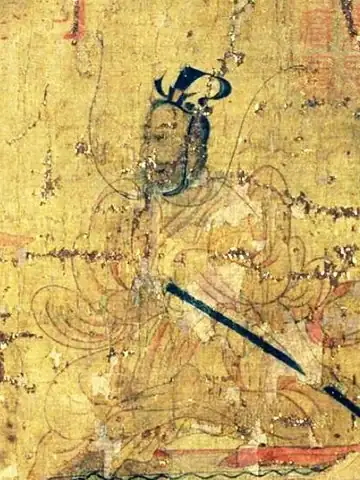
Portrait of Emperor Yuan of Han

Western Han · 11th ruler

Reigned 48–33 BC (15 years)

漢元帝 Other names ›

Facts

Emperor Yuan of Han reigned for 15 years (48–33 BC) and died of natural causes (age unknown). 11th ruler of Western Han.

Reign
29 January 48 BC – 8 July 33 BC (11th ruler of Western Han)
Length of reign
15 years
Born
Unknown
Died
8 July 33 BC
Age at accession
Unknown
Age at death
Unknown
Cause of death
Natural causesNatural death or illness (including old age)
Path to the throne
Designated heirSucceeded the previous ruler of the same regime, who had chosen the heir (by testament, naming a crown prince, etc.)
Era names
  • 初元 Chūyuán (proclaimed 48 BC)
  • 永光 Yǒngguāng (proclaimed 43 BC)
  • 建昭 Jiànzhāo (proclaimed 38 BC)
  • 竟寧 Jìngníng (proclaimed 33 BC)
Posthumous name
漢元帝 Hàn Yuándì
Temple name
漢高宗 Hàn Gāozōng
Personal name
劉奭 Liú Shì
Wade–Giles
Han Yüan-ti · Liu Shih

Life

In brief

The appraisal in the Book of Han judges that he was indecisive and that the work of Emperor Xuan declined, but that he was magnanimous and respectful and frugal, and that his orders were gentle.

Road to the throne

His mother, Empress Xu, was killed at the instigation of Xian, the wife of Huo Guang. In 67 BC, when he was made crown prince, Xian tried to have Empress Huo poison him, but his nurse always tasted the food first, so it could not be carried out. He advised that the punishments were too harsh and that Confucian scholars should be employed, and Emperor Xuan lamented that it was the crown prince who would throw the Han house into disorder, but he was not deposed. When Sima Liangdi, whom he favored, died leaving word that the other consorts had cursed her to death, he kept the consorts away. He took no interest in the five women chosen by Emperor Xuan's empress and answered that one of them would do, and Wang Zhengjun, who was sitting near him, was sent to him, and in 51 BC Emperor Cheng of Han was born. In 48 BC Emperor Xuan of Han died and he took the throne.

Reign and death

In 46 BC, when he allowed the imprisonment of his teacher Xiao Wangzhi at the request of Shi Xian and the others, Xiao Wangzhi killed himself, and the emperor lamented that he had indeed killed his wise teacher, pushed away his food, and in tears reproached Shi Xian and the others. He did not attend to government because of illness, and every matter, great or small, was decided through Shi Xian. Asked by Jing Fang, he admitted that the present was in extreme disorder, but answered that those he employed were better. Jing Fang later spoke of Shi Xian's faults, and Shi Xian searched out a crime of Jing Fang's and had him executed. He often praised Liu Kang, an imperial son with a talent for music, but when Shi Dan admonished him not to measure men by instruments, the emperor laughed silently. In 35 BC he was angered at the crown prince for showing no grief at the mourning visit for the emperor's youngest brother, the Prince of Zhongshan, but when Shi Dan apologized that it was he who had told the crown prince not to weep so as not to grieve His Majesty, his feelings were eased. In 33 BC he gave Wang Zhaojun to the Xiongnu Chanyu Huhanye, who had come to court. That Zhaojun asked to go herself is in the Book of the Later Han and is not in the Book of Han. The same year, on his sickbed he asked about the precedent of Emperor Jing of Han's replacing the crown prince, but when Shi Dan admonished him with tears, the emperor said that the late emperor had also loved the crown prince and entrusted Shi Dan to support the crown prince. The biography of Shi Dan records only Shi Dan's admonition, but the Zizhi Tongjian has it that Wang Shang and Shi Xian also shielded the crown prince, and the biographies of the favorites in the Book of Han also record Shi Xian's defense of the crown prince. He died at Weiyang Palace soon afterward.

Translated from the Japanese text of this site, which is written from the official histories. Years are the Western calendar years of the dates, as in English reference works. Months are omitted because the histories use the Chinese lunar calendar.

During the reign

Number of times each event is recorded in the official histories. How each item is counted

Era name changes
4
General amnesties
10
Empresses installed
1
Crown princes deposed
0
Personal campaigns
0
Rebellions suppressed
1
Rebellions faced
2
Capital relocations
0

Emperors of Western Han

All 14 emperors of Western Han