Skip to content

Zhao Bing

After the death of his elder brother Emperor Duanzong of Song he was set up by the remnant officials of Song on the sea, and after the defeat in the battle of Yashan he was carried on Lu Xiufu's back and sank into the sea, becoming the last emperor of Song.
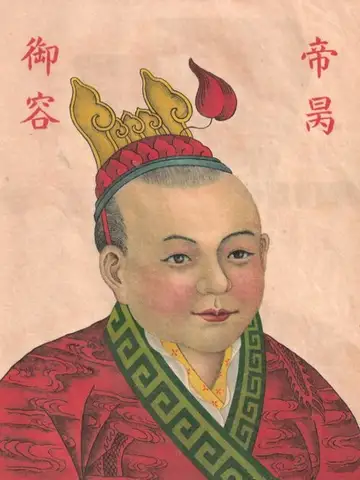
Portrait of Zhao Bing

Southern Song · Song · 10th ruler

Reigned 1278–1279 (313 days)

宋衛王 Other names ›

Facts

Zhao Bing reigned for 313 days (1278–1279), taking the throne at 6, and died by suicide at 7. 10th ruler of Southern Song.

Reign
10 May 1278 – 19 March 1279 (10th ruler of Southern Song)
Length of reign
313 days
Born
12 February 1272
Died
19 March 1279
Age at accession
6
Age at death
7
Cause of death
Suicide (incl. forced)Took their own life, including when driven to it by deposition or defeat, or when ordered to do so
Path to the throne
Installed by othersSucceeded the previous ruler of the same regime, but the choice was made by officials, the army, eunuchs, consort kin, an empress dowager or the imperial clan
Era names
  • 祥興 Xiángxīng (proclaimed 1278)
Chinese name
宋衛王 Sòng Wèiwáng
Personal name
趙昺 Zhào Bǐng
Wade–Giles
Sung Wei-wang · Chao Ping

Life

Road to the throne

He was a son of Emperor Duzong of Song by a concubine, and his mother was the xiurong Lady Yu. When his elder brother Emperor Gong of Song was set up, he became Prince of Xin, and when the Yuan army pressed on Lin'an he was transferred to the title of Prince of Guang. In 1276, when Chen Yizhong and others set up his elder brother Emperor Duanzong of Song at Fuzhou, he was enfeoffed as Prince of Wei. In 1278, when Duanzong, who had fled on the sea, died at Gangzhou, the assembled officials set up the Prince of Wei two days later. According to the biography of Lu Xiufu, when the assembled officials were about to disperse, Lu Xiufu argued that one son of Duzong still remained, and with the others he set up the Prince of Wei.

Reign and death

In the same year the era name was changed to Xiangxing and he moved to Yashan. In 1279, when Zhang Hongfan's Yuan army closed on Yashan, Zhang Shijie rejected the plan of seizing the sea mouth first, bound more than a thousand great ships together with cables so that they stood firm like a fortress, and placed the Prince of Wei among them. According to the biography of Zhang Shijie, in time the route for firewood and water was cut off, and the soldiers drank sea water, vomited and had diarrhea. Even though Zhang Hongfan sent Zhang Shijie's nephew to call on him three times to surrender, Zhang Shijie answered that his resolve to die for his lord was unchanged. On the day of the decisive battle the Song army was caught in a pincer attack and collapsed, and Zhang Shijie got out of the harbor with more than ten ships. Lu Xiufu ran to the boat of the Prince of Wei, but, seeing that the boats were tied together so that he could not get out, he drove his wife and children into the sea, and then, carrying the Prince of Wei on his back, threw himself into the sea. The biography of Zhang Shijie writes that the defeated Zhang Shijie ran to the boat of the Prince of Wei and, when the Yuan army pressed close, cut the cables and left. In the Xu Zizhi Tongjian and the Songshi Jishi Benmo, before fleeing Zhang Shijie sent a small boat to move the Prince of Wei to his own boat and get away, but Lu Xiufu, fearing betrayal or humiliation, did not consent. The cause of death on this site is suicide because his drowning together with Lu Xiufu, in dying for his state, was counted as suicide. The annals of the History of Song and the biography of Lu Xiufu do not record what Lu Xiufu said at that time, while the Xu Zizhi Tongjian, the Songshi Jishi Benmo and the Songji Sanchao Zhengyao write that he said His Majesty should die for the state. According to the annals, the Empress Dowager Yang too, on hearing the news, threw herself into the sea, and Zhang Shijie also died later, and Song came to an end.

Translated from the Japanese text of this site, which is written from the official histories. Years are the Western calendar years of the dates, as in English reference works. Months are omitted because the histories use the Chinese lunar calendar.

During the reign

Number of times each event is recorded in the official histories. How each item is counted

Era name changes
1
General amnesties
0
Empresses installed
0
Crown princes deposed
0
Personal campaigns
0
Rebellions suppressed
0
Rebellions faced
0
Capital relocations
0

Emperors of Southern Song