Skip to content

Tongzhi Emperor

Muzong was the Tongzhi Emperor, personal name Zaichun. He was the eldest son of the Xianfeng Emperor (Wenzong), and his mother was Empress Xiaoqinxian of the Nara clan.
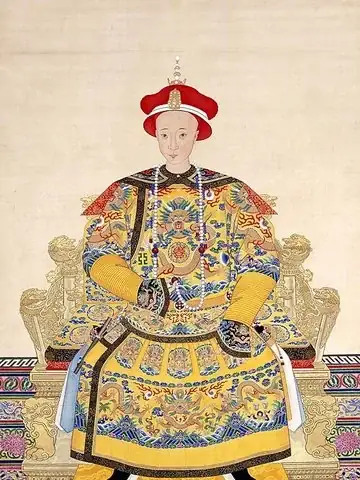
Portrait of Tongzhi Emperor

Qing · 10th ruler

Reigned 1861–1875 (13 years)

同治帝 Other names ›

Facts

The Tongzhi Emperor reigned for 13 years (1861–1875), taking the throne at 5, and died of natural causes at 18. 10th ruler of Qing.

Reign
11 November 1861 – 12 January 1875 (10th ruler of Qing)
Length of reign
13 years
Born
27 April 1856
Died
12 January 1875
Age at accession
5
Age at death
18
Cause of death
Natural causesNatural death or illness (including old age)
Path to the throne
Designated heirSucceeded the previous ruler of the same regime, who had chosen the heir (by testament, naming a crown prince, etc.)
Predecessor
Xianfeng Emperor
Era names
  • 同治 Tóngzhì (proclaimed 1861)
Temple name
清穆宗 Qīng Mùzōng
Personal name
愛新覺羅載淳 Àixīnjuéluó Zàichún
Wade–Giles
T'ung-chih Emperor · Ai-hsin-chüeh-lo Tsai-ch'un

Life

In brief

He took the throne as a child in 1861, reigned under the two empresses dowager who ruled from behind the screen, and died in the Hall of Mental Cultivation in 1875.

Road to the throne

The annals of Muzong record that the gravely ill Wenzong summoned Zaiyuan, Duanhua, Jingshou, Sushun and the other ministers of the presence and grand councillors, proclaimed his decree, and made Zaichun crown prince. Later Zaiyuan, Duanhua and Sushun were dismissed, stripped of their ranks and offices, and arrested for interrogation, on the charge of altering imperial orders on their own authority and strongly opposing rule from behind the screen. Prince Gong and others proposed death by slicing for the three under the law on high treason, but Zaiyuan and Duanhua were allowed to kill themselves, and Sushun was beheaded. Zaichun took the imperial throne in the Hall of Supreme Harmony and proclaimed an amnesty with an edict making the next year the first year of Tongzhi. The era name had first been set as Qixiang and was changed to Tongzhi four days before the enthronement. Some twenty days later the emperor appeared in the Hall of Mental Cultivation, and the two empresses dowager, Ci'an and Cixi, began to rule from behind the screen.

Reign and death

The annals record that in 1864 government forces took Jiangning, that Hong Xiuquan had already killed himself, and that the region south of the Yangtze was pacified. In 1873 the empresses dowager Ci'an and Cixi issued an edict of encouragement, and the emperor began to rule in person. The annals for the same year also report the execution of Du Wenxiu in Yunnan. In 1874 work on the Yuanmingyuan was ordered stopped; the next day Prince Gong was reproached for improper conduct at an audience and demoted to prince of the second rank, but the day after that an edict of the empresses dowager restored his hereditary rank as prince of the first rank. In the winter of that year the emperor fell ill and had Li Hongzao read memorials in his place. The emperor's illness became critical and he died in the Hall of Mental Cultivation. The annals do not name the illness. As the emperor had no son, the two empresses dowager summoned Yicong, Prince Dun, Yixin, Prince Gong, Yixuan, Prince Chun, and others, and set up Prince Chun's son as heir to Wenzong and as the succeeding emperor. The annals of Muzong place his death after the jiaxu entry without a date of its own, while the annals of Dezong place it under the guiyou entry.

Translated from the Japanese text of this site, which is written from the official histories. Years are the Western calendar years of the dates, as in English reference works. Months are omitted because the histories use the Chinese lunar calendar.

During the reign

Number of times each event is recorded in the official histories. How each item is counted

Era name changes
1
General amnesties
1
Empresses installed
1
Crown princes deposed
0
Personal campaigns
0
Rebellions suppressed
8
Rebellions faced
9
Capital relocations
0

Emperors of Qing

All 12 rulers of Qing