Skip to content

Xianfeng Emperor

He was a Qing emperor who was beset by the Taiping Rebellion and the war with Britain and France, and who died at the traveling palace in Rehe, away from Beijing.
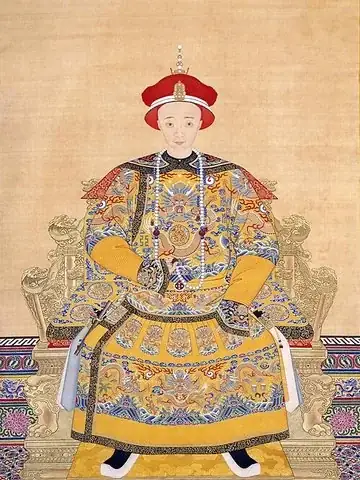
Portrait of Xianfeng Emperor

Qing · 9th ruler

Reigned 1850–1861 (11 years)

咸豐帝 Other names ›

Facts

The Xianfeng Emperor reigned for 11 years (1850–1861), taking the throne at 18, and died of natural causes at 30. 9th ruler of Qing.

Reign
9 March 1850 – 22 August 1861 (9th ruler of Qing)
Length of reign
11 years
Born
17 July 1831
Died
22 August 1861
Age at accession
18
Age at death
30
Cause of death
Natural causesNatural death or illness (including old age)
Path to the throne
Designated heirSucceeded the previous ruler of the same regime, who had chosen the heir (by testament, naming a crown prince, etc.)
Predecessor
Daoguang Emperor
Era names
  • 咸豐 Xiánfēng (proclaimed 1850)
Temple name
清文宗 Qīng Wénzōng
Personal name
愛新覺羅奕詝 Àixīnjuéluó Yìzhǔ
Wade–Giles
Hsien-feng Emperor · Ai-hsin-chüeh-lo I-chu

Life

Road to the throne

He was the fourth son of the Daoguang Emperor; he lost his birth mother, Empress Xiaoquan, early and was raised by the mother of Yixin, the later Prince Gong. He studied under Du Shoutian, and in the same study room as his younger brother Yixin he worked out spear and sword routines together with him. According to the biography of Du Shoutian in the Draft History of Qing, at a hunt in the Southern Park he did not loose a single arrow, saying that spring is when birds and beasts raise their young, which pleased the Daoguang Emperor and quietly settled the succession, but the annals do not contain this story. In 1850 the critically ill Daoguang Emperor made his fourth son crown prince by the written order in the sealed box, his father died that same day, and he soon took the throne.

Reign and death

According to the biography of Mujangga, in the year of his accession he dismissed Mujangga, whom he had loathed since he was a prince, but spared the old minister of three reigns a heavy punishment, and the realm cheered. To Zeng Guofan's blunt memorial, according to the biography of Zeng Guofan he replied with an edict of praise, and the edict in the Veritable Records called it impractical and intemperate yet did not reprimand him. In 1851 Hong Xiuquan proclaimed the Taiping Heavenly Kingdom, and in 1853 he took Jiangning. As his trust in Sushun grew, he dismissed Baijun over the examination fraud of the previous year; according to the biographies of Baijun and Sushun, at the final judgment in 1859 he wanted to pardon him but was blocked by Sushun and others, and the biography of Baijun says that he wept that the law could not be relaxed and approved the execution. The annals say only that the execution at the final judgment followed the sentence proposed by Zaiyuan and Duanhua. In 1860, when British and French troops took Tianjin and closed in on Beijing, the emperor left the Yuanmingyuan for Rehe; the biography of Sushun says that most of the measures of this time were Sushun's plans, and the biography of Wenxiang says that it was Senggelinqin's secret memorial that asked for the move to Rehe. According to the biography of Baojun, he ordered repairs to the traveling palace in Rehe, grew angry with Baojun for opposing it, and demoted him when the Three Hills under Baojun's charge were looted, but soon restored him. British and French troops burned the Yuanmingyuan, and the emperor told Yixin, who had concluded the peace and asked to be punished, that no punishment was needed. In 1861 he wrote in a letter in his own hand that coughing and bloody phlegm required him to rest, and according to the testamentary edict in the Veritable Records diarrhea from the summer heat also lingered, and he died at the traveling palace. Before his death he made his eldest son crown prince, and according to the annals of Muzong he had eight men, including Sushun, assist in governing. The assessment in the Draft History of Qing praises him, saying that although he never had a peaceful day, he employed worthy men and responded well.

Translated from the Japanese text of this site, which is written from the official histories. Years are the Western calendar years of the dates, as in English reference works. Months are omitted because the histories use the Chinese lunar calendar.

During the reign

Number of times each event is recorded in the official histories. How each item is counted

Era name changes
1
General amnesties
0
Empresses installed
1
Crown princes deposed
0
Personal campaigns
0
Rebellions suppressed
8
Rebellions faced
13
Capital relocations
0

Emperors of Qing

All 12 rulers of Qing