Yongzheng Emperor
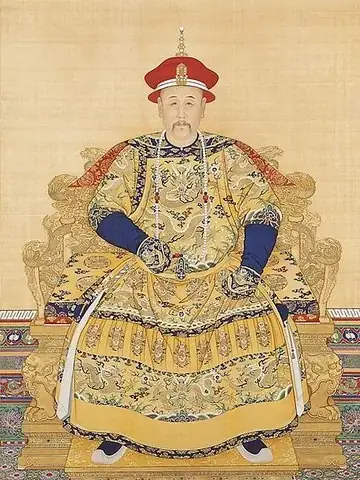
Qing · 5th ruler
雍正帝 Yōngzhèng Dì愛新覺羅胤禛 Àixīnjuéluó Yìnzhēn
Wade–Giles: Yung-cheng Emperor · Ai-hsin-chüeh-lo Yin-chen
Reigned 1722–1735 (12 years)
Reigned 12 years (1722–1735). Died at 58 (East Asian reckoning); cause of death disputed. 5th ruler of Qing.
Facts
- Reign
- 27 December 1722 – 8 October 1735 (5th ruler of Qing)
- Length of reign
- 12 years
- Born
- 13 December 1678
- Died
- 8 October 1735
- Age at accession
- 45
- Age at death
- 58
- Cause of death
- DisputedPrimary sources or accepted accounts conflict and cannot be narrowed to one
- Path to the throne
- Designated heirSucceeded the previous ruler of the same regime, who had chosen the heir (by testament, naming a crown prince, etc.)
- Predecessor
- Kangxi Emperor
- Successor
- Qianlong Emperor
- Era names
- 雍正 Yōngzhèng (proclaimed 1722)
Ages are given in East Asian reckoning (sui): a person is one year old at birth and gains a year at each New Year, so the figure is one or two years higher than the Western age.
Life
In brief
He started the practice of sealing the name of the heir behind the Zhengda Guangming plaque, and he created the post of Grand Councillor.
Road to the throne
He was the fourth son of the Kangxi Emperor, and was made Prince Yong in 1709. According to the annals in the Draft History of Qing, in 1722 the dying Kangxi Emperor summoned him and had an edict proclaimed giving him the throne, and he took the throne after the Kangxi Emperor died. The annals of the Kangxi Emperor record only the death, and the Draft History of Qing contains neither the text of the testamentary edict nor the story that a bequest of the throne to the fourteenth son was rewritten. The Veritable Records of the Qing say that on his deathbed the Kangxi Emperor summoned his sons and Longkodo and told them that his fourth son, being of grave character, should succeed him. Later, when he punished Longkodo, the Yongzheng Emperor himself said that Longkodo had been the only minister to receive the late emperor's command when he died.
Reign and death
In 1723 he gathered the princes and ministers and told them he had written his heir's name himself, sealed it and placed it behind the plaque, adding that in the late emperor's time the matter had been settled with a single word amid great haste. In 1726 he ordered Nian Gengyao to take his own life, in the same year removed his brother Yinsi from the imperial clan register and renamed him Akina, and in 1727 sentenced Longkodo to lifelong confinement. In 1735 he collapsed with illness at the Yuanmingyuan, became critically ill the next day and passed the throne to his fourth son Hongli, Prince Bao, and died the day after that. The Draft History of Qing does not give his cause of death, and contains nothing that suggests elixirs or poison. The Veritable Records of the Qing contain an entry in which the newly enthroned Qianlong Emperor sent the Daoist Zhang Taixu and others, whom the late emperor had kept in the Western Park, back to their home towns, stating that the late emperor had used neither their words nor their medicines. This site lists his cause of death as disputed because there is research that infers poisoning by elixirs from this entry and others.
Translated from the Japanese text of this site, which is written from the official histories. Years are given in the Western calendar; months are omitted because the histories use the Chinese lunar calendar.
During the reign
Number of times each event is recorded in the official histories. How each item is counted
- Era name changes
- 1
- General amnesties
- 0
- Empresses installed
- 1
- Crown princes deposed
- 0
- Personal campaigns
- 0
- Rebellions suppressed
- 15
- Rebellions faced
- 15
- Capital relocations
- 0
Emperors of Qing
- 2ndHong Taiji清太宗 Qīng Tàizōng愛新覺羅皇太極 Àixīnjuéluó Huángtàijí1636–1643 · 7 years · Unknown, age 521636–16437 yearsUnknown, age 52
- 3rdShunzhi Emperor順治帝 Shùnzhì Dì愛新覺羅福臨 Àixīnjuéluó Fúlín1643–1661 · 17 years · Natural causes, age 241643–166117 yearsNatural causes, age 24
- 4thKangxi Emperor康熙帝 Kāngxī Dì愛新覺羅玄燁 Àixīnjuéluó Xuányè1661–1722 · 61 years · Natural causes, age 691661–172261 yearsNatural causes, age 69
- 5thYongzheng Emperor雍正帝 Yōngzhèng Dì愛新覺羅胤禛 Àixīnjuéluó Yìnzhēn1722–1735 · 12 years · Disputed, age 581722–173512 yearsDisputed, age 58
- 6thQianlong Emperor乾隆帝 Qiánlóng Dì愛新覺羅弘曆 Àixīnjuéluó Hónglì1735–1796 · 60 years · Natural causes, age 891735–179660 yearsNatural causes, age 89
- 7thJiaqing Emperor嘉慶帝 Jiāqìng Dì愛新覺羅顒琰 Àixīnjuéluó Yóngyǎn1796–1820 · 24 years · Natural causes, age 611796–182024 yearsNatural causes, age 61
- 8thDaoguang Emperor道光帝 Dàoguāng Dì愛新覺羅旻寧 Àixīnjuéluó Mínníng1820–1850 · 29 years · Natural causes, age 691820–185029 yearsNatural causes, age 69
- 9thXianfeng Emperor咸豐帝 Xiánfēng Dì愛新覺羅奕詝 Àixīnjuéluó Yìzhǔ1850–1861 · 11 years · Natural causes, age 311850–186111 yearsNatural causes, age 31
- 10thTongzhi Emperor同治帝 Tóngzhì Dì愛新覺羅載淳 Àixīnjuéluó Zàichún1861–1875 · 13 years · Natural causes, age 191861–187513 yearsNatural causes, age 19
- 11thGuangxu Emperor光緒帝 Guāngxù Dì愛新覺羅載湉 Àixīnjuéluó Zàitián1875–1908 · 33 years · Assassinated, age 381875–190833 yearsAssassinated, age 38
- 12th, 13th, 14thPuyi宣統帝 Xuāntǒng Dì愛新覺羅溥儀 Àixīnjuéluó Pǔyí1908–1912; restored 1917; restored 1934–1945 · 14 years · Natural causes, age 621908–1912; restored 1917; restored 1934–194514 yearsNatural causes, age 62