Skip to content

Yesün Temür

He was the emperor of Yuan who, after Gegeen Khan was killed, was welcomed at the northern frontier and took the throne, whose reign was called an age of good order, but who after his death was accused in an edict of Tugh Temür of having had dealings with the treasonable ministers.
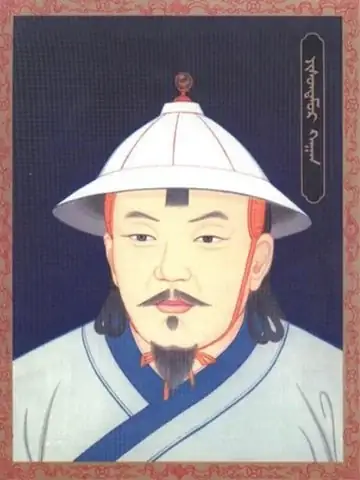
Portrait of Yesün Temür

Yuan · 10th ruler

Reigned 1323–1328 (4 years)

元泰定帝 Other names ›

Facts

Yesün Temür reigned for 4 years (1323–1328) and died of natural causes at 34 or 35. 10th ruler of Yuan.

Reign
4 October 1323 – 15 August 1328 (10th ruler of Yuan)
Length of reign
4 years
Born
Unknown
Died
15 August 1328
Age at accession
Unknown
Age at death
34–35
Cause of death
Natural causesNatural death or illness (including old age)
Path to the throne
Installed by othersSucceeded the previous ruler of the same regime, but the choice was made by officials, the army, eunuchs, consort kin, an empress dowager or the imperial clan
Predecessor
Gegeen Khan
Successor
Ragibagh Khan
Era names
  • 泰定 Tàidìng (proclaimed 1324)
  • 致和 Zhìhé (proclaimed 1328)
Chinese name
元泰定帝 Yuán Tàidìngdì
Personal name
也孫鐵木兒 Yěsūntiěmù'ér
Wade–Giles
Yüan T'ai-ting-ti

Life

Road to the throne

He was the eldest son of Kammala (Xianzong), and in 1302 he succeeded his father as Prince of Jin and guarded the northern frontier. In 1323, Daolasha, the household secretary of the Prince of Jin, formed a deep bond with Tante, the Xuanhui commissioner, who had come to tell him that the sovereign would no longer tolerate the Prince of Jin. In the same year, the Censor-in-Chief Tegshi sent word to the Prince of Jin that if the deed succeeded they would set the Prince up as emperor, and had Daolasha told of it as well, and the Prince of Jin imprisoned the envoy and sent envoys to Shangdu to report the treasonable plot, but they did not arrive in time. When Gegeen Khan was killed at Nanpo, the princes Antibuhua and Esen Temür bore the imperial seal and cord and welcomed the Prince of Jin, and the Prince of Jin took the throne at the Longju River, but both were later punished for joining the treasonable plot. In his accession edict he said that he was the eldest grandson of Jingim (Yuzong) and that there were no brothers to contend with him, and he called Gegeen Khan his nephew the emperor.

Reign and death

On taking the throne he made Esen Temür Right Chancellor and Tegshi Administrator of the Bureau of Military Affairs, but before long had them executed as traitors, and the sons and grandsons of Tegshi and the others were killed as well. In 1324, when the censors and chancellors sought to resign on the ground of calamities and anomalies, he answered that the fault lay with him, and that if all of them went away, with whom would he plan the great affairs of state. In the same year, Zhang Gui and others argued about such matters as the punishment of the treasonable faction and the increase of Buddhist services, but the emperor would not follow them. Three times he himself received the Buddhist precepts from the Imperial Preceptor, and he did not take up the words of the censor who asked that the purchase of the jewels of Western merchants be curtailed. He meant to set up a lantern mountain, but when the censor Zhao Shilu remonstrated with him he at once called it off. According to the annals of Wenzong in the History of Yuan, in 1328 he returned to the palace from a hunt at Liulin because of illness, and died at Shangdu in the same year, but the annals of Yesün Temür record neither illness nor place in the entry on his death. Daolasha set up the crown prince Ragibagh Khan as emperor and changed the era name to Tianshun. Tugh Temür, having taken the throne, accused in an edict the house of the Prince of Jin of breaking its covenant, of secretly communicating with Tegshi and the others, and of bringing about the regicide of Gegeen Khan. The end of the annals of Yesün Temür assesses that calamities and anomalies were many and no trace is seen of ruler and ministers reproaching themselves, yet he kept to the laws of the ancestors and the realm was without trouble and was called well ordered. The historians' comment in the New History of Yuan praises his punishment of Tegshi and the others and says that Tugh Temür used every word of false accusation and contempt.

Translated from the Japanese text of this site, which is written from the official histories. Years are the Western calendar years of the dates, as in English reference works. Months are omitted because the histories use the Chinese lunar calendar.

During the reign

Number of times each event is recorded in the official histories. How each item is counted

Era name changes
2
General amnesties
4
Empresses installed
1
Crown princes deposed
0
Personal campaigns
0
Rebellions suppressed
3
Rebellions faced
9
Capital relocations
0

Emperors of Yuan

All 15 rulers of Yuan