Skip to content

Külüg Khan

He was a Yuan emperor who fought Qaidu's army north of the desert, took the throne after his younger brother Ayurbarwada Buyantu Khan eliminated the empress's faction, and drove the state finances into decline with unstinting grants before dying young.
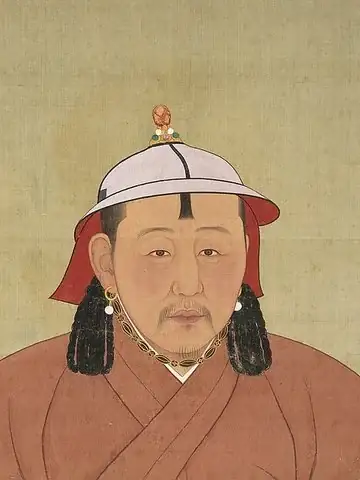
Portrait of Külüg Khan

Yuan · 7th ruler

Reigned 1307–1311 (3 years)

元武宗 Other names ›

Facts

Külüg Khan reigned for 3 years (1307–1311), taking the throne at 25, and died of natural causes at 29. 7th ruler of Yuan.

Reign
21 June 1307 – 27 January 1311 (7th ruler of Yuan)
Length of reign
3 years
Born
4 August 1281
Died
27 January 1311
Age at accession
25
Age at death
29
Cause of death
Natural causesNatural death or illness (including old age)
Path to the throne
Installed by othersSucceeded the previous ruler of the same regime, but the choice was made by officials, the army, eunuchs, consort kin, an empress dowager or the imperial clan
Predecessor
Temür Khan
Era names
  • 至大 Zhìdà (proclaimed 1308)
Temple name
元武宗 Yuán Wǔzōng
Personal name
海山 Hǎishān
Wade–Giles
Yüan Wu-tsung

Life

Road to the throne

He was a son of Shunzong and was born in 1281. In 1301 he fought Qaidu on the northern frontier and threw himself into the fighting; Qaidu left without gaining his aim and died soon after. When Temür Khan died in 1307, his younger brother Ayurbarwada struck first and killed Aqutai and the others who had plotted to have the empress rule as regent, turned down the urgings that he take the throne himself, and sent for his elder brother. According to the biography of Kangli Tuotuo, his mother the empress dowager sent him word of a divination that his younger brother would last longer and told him to weigh the question, and he suspected a scheme by powerful ministers; but when Tuotuo brought back the words of the empress dowager and Ayurbarwada, he let go of his doubts. After the princes held a council at Shangdu, Temür Khan's empress was deposed and ordered to take her own life, and Ananda, Prince of Anxi, and others were ordered to take their own lives as well, and Külüg Khan took the throne.

Reign and death

In the year he took the throne he made his younger brother by the same mother, Ayurbarwada, crown prince, and according to the annals of Mingzong he ordered that the succession next pass to his own eldest son. When the Censorate remonstrated that setting up a Department of State Affairs for fiscal purposes would not benefit the people, he said that this was quite true, but that as three ministers wished to take it on he would let them proceed for a time. In 1308 the Secretariat said that the grants to the princes had emptied the treasury and that salt certificates were being sold in advance. Külüg Khan suspected Tula, Prince of Yue, of disloyalty in part because he had aired his discontent when drunk, and in 1309 ordered him to take his own life. When he was asked to stop the work because the people were suffering from locusts, he said that without corner towers the imperial city would not be a grand sight, and had the towers built first and the rest put off. The same year he set up the Department of State Affairs again and issued the Zhida silver notes. According to the biography of Ashabuhua in the New History of Yuan, when he was admonished that giving himself up to wine and women was like cutting a single tree with two axes, he was delighted and pressed wine on Ashabuhua, but when this was declined he stopped drinking. The Xu Zizhi Tongjian does not write that he stopped drinking, but says that those around him congratulated the emperor on gaining an upright minister, and that he then appointed Ashabuhua Right Chancellor. In 1311 he fell ill and dispensed with the court congratulations, and before long he died in the Yude Hall. The historians' comment in the New History of Yuan, while saying that there is no good deed of his to write, judges that he did not shame filial and brotherly virtue in passing the throne to Ayurbarwada.

Translated from the Japanese text of this site, which is written from the official histories. Years are the Western calendar years of the dates, as in English reference works. Months are omitted because the histories use the Chinese lunar calendar.

During the reign

Number of times each event is recorded in the official histories. How each item is counted

Era name changes
1
General amnesties
2
Empresses installed
1
Crown princes deposed
0
Personal campaigns
0
Rebellions suppressed
6
Rebellions faced
6
Capital relocations
0

Emperors of Yuan

All 15 rulers of Yuan