Skip to content

Jingtai Emperor

He was a Ming emperor who took the throne when his elder brother, the Emperor Yingzong of Ming, was captured by the Oirats and defended Beijing, but was deposed when his brother was restored.
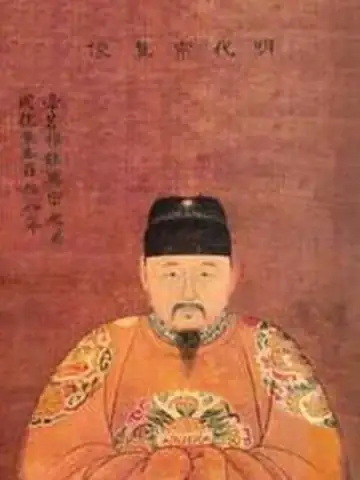
Portrait of Jingtai Emperor

Ming · 7th ruler

Reigned 1449–1457 (7 years)

景泰帝 Other names ›

Facts

The Jingtai Emperor reigned for 7 years (1449–1457), taking the throne at 20 or 21, and died at 28 or 29; the cause of death is disputed. 7th ruler of Ming.

Reign
22 September 1449 – 11 February 1457 (7th ruler of Ming)
Length of reign
7 years
Born
1428
Died
14 March 1457
Age at accession
20–21
Age at death
28–29
Cause of death
DisputedPrimary sources or accepted accounts conflict and cannot be narrowed to one
Path to the throne
Installed by othersSucceeded the previous ruler of the same regime, but the choice was made by officials, the army, eunuchs, consort kin, an empress dowager or the imperial clan
Successor
Emperor Yingzong of Ming (restoration)
Era names
  • 景泰 Jǐngtài (proclaimed 1449)
Temple name
明代宗 Míng Dàizōng
Personal name
朱祁鈺 Zhū Qíyù
Wade–Giles
Ching-t'ai Emperor · Chu Ch'i-yü

Life

Road to the throne

He was the second son of the Xuande Emperor, and when his elder brother Yingzong took the throne he was made Prince of Cheng. In 1449, when Yingzong was captured by the Oirats at Tumu, he took charge of the government at the order of the empress dowager. The ministers asked the empress dowager to set up the Prince of Cheng, and he declined twice but accepted after Yu Qian persuaded him, then took the throne and made his elder brother the retired emperor.

Reign and death

Soon after he took the throne, Esen of the Oirats pressed on Beijing, but Yu Qian and Shi Heng and others drove him back. He accepted all of Yu Qian's memorials, and when Yu Qian fell ill he went in person to Wansui Hill, cut bamboo, and took medicine to give him. Esen offered to return the retired emperor, and when Wang Zhi and others deliberated on sending envoys to welcome him back, the emperor was displeased and said that he had not originally wished to ascend the throne and that it was they who had pushed him, but after Yu Qian reasoned with him he sent envoys. In 1450, when the retired emperor returned, he welcomed him at the Dong'an Gate, and when the retired emperor entered the Southern Palace, the emperor led the hundred officials to pay their respects to him. In 1452, when Huang Zeng memorialized that the crown prince be changed, he was greatly pleased, deposed the crown prince who was the retired emperor's son, and set up his own son. That son died the next year. He sent Zhong Tong and others, who had asked that the Prince of Yi be restored as crown prince, to prison, and had Zhong Tong beaten in prison until he died. Even so, he angrily rejected a proposal that the Prince of Yi be moved to his fief to cut off the hopes placed in him, and that a son of an imperial prince be chosen separately and raised in the palace. Early in 1457 he fell ill, and later that year, right after he refused calls to designate a crown prince, Shi Heng and Xu Youzhen and others welcomed the retired emperor back and restored him to the throne. He was demoted to the Prince of Cheng and moved into the Western Palace, and he died within the same year and was given the posthumous name Li. The History of Ming and the Veritable Records of the Yingzong reign do not record how he died. It is Ming-dynasty notes such as the Bingyi Manji by the Ming writer Lu Yi that say that the eunuch Jiang An strangled him to death with silk. Early in 1476 the Chenghua Emperor, his nephew, restored him to the title of emperor. The appraisal in the History of Ming judges his achievement in employing the worthy and able, striving at government, and restoring the state to be great, while criticizing him for hastily changing the crown prince and for deeply closing the Southern Palace and not allowing audiences. Gu Yingtai, discussing his accession, judges that he was truly an outstanding ruler but clung to the throne, and discussing the Duomen Coup, says that the day and month of his death have no clear record in the histories and that a doubt like that of the candle shadow and the axe sound remains.

Translated from the Japanese text of this site, which is written from the official histories. Years are the Western calendar years of the dates, as in English reference works. Months are omitted because the histories use the Chinese lunar calendar.

During the reign

Number of times each event is recorded in the official histories. How each item is counted

Era name changes
1
General amnesties
4
Empresses installed
2
Crown princes deposed
1
Personal campaigns
0
Rebellions suppressed
3
Rebellions faced
5
Capital relocations
0

Emperors of Ming

All 16 emperors of Ming